
New Zealand
Explore New Zealand: A Complete Travel Guide
New Zealand packs an astonishing variety of landscapes into two main islands: fjords and glaciers, volcanoes and geothermal valleys, golden beaches, vineyards and some of the world’s finest hiking trails. Add a strong Māori culture, friendly small towns, adventure sports in Queenstown and the film locations of The Lord of the Rings, and it is easy to see why so many travellers call it the trip of a lifetime. This guide covers when to go, entry rules and fees, getting around, costs, safety and etiquette, the top places to visit, food and where to stay.
New Zealand travel guide: the essentials
- Capital: Wellington. The largest city is Auckland, the main international gateway.
- Currency: New Zealand dollar (NZD). Cards and contactless payments are accepted almost everywhere.
- Languages: English, Māori (te reo Māori) and New Zealand Sign Language are official.
- Entry: most visa-waiver travellers need an NZeTA and pay the NZD 100 International Visitor Levy before they fly.
- Electricity: 230 V with type I plugs, the same as in Australia.
- Driving: on the left.
- Best for: road trips, hiking, fjords and mountains, adventure sports, wildlife, wine and Māori culture.

Contents
- Best time to visit New Zealand
- Entry rules, NZeTA and visitor levy
- Getting around New Zealand
- Travel costs in 2026
- Safety and practical matters
- Māori culture and etiquette
- Top places to visit
- Food and where to eat
- Where to stay
- Itinerary ideas
- Practical tips
Best time to visit New Zealand
New Zealand is in the Southern Hemisphere, so the seasons are the reverse of Europe and North America.
- Summer (December to February): the warmest and busiest season, ideal for beaches, hiking and road trips. Book campervans and accommodation well ahead.
- Autumn (March to May): settled weather, fewer crowds and golden colours in Central Otago. Often the best time overall.
- Winter (June to August): skiing in Queenstown, Wanaka and on Mount Ruapehu. Some mountain roads and passes may close after snow.
- Spring (September to November): lambs, blossom and waterfalls in full flow, but the weather changes quickly.
The weather can change several times a day, especially in the mountains, so always pack layers and a rain jacket.
Entry rules, NZeTA and visitor levy
- NZeTA: citizens of visa-waiver countries, including the EU, the UK, the US and Canada, need a New Zealand Electronic Travel Authority before they travel. It costs NZD 17 in the official app or NZD 23 on the website and is valid for up to two years.
- International Visitor Levy (IVL): most visitors pay a levy of NZD 100 per person, charged together with the NZeTA or visa. It funds conservation and tourism infrastructure. Australian citizens and permanent residents are exempt.
- Length of stay: visa-waiver visitors can usually stay up to three months (UK citizens up to six months). Your passport must be valid for at least three months after your planned departure.
- Biosecurity: New Zealand has some of the strictest border rules in the world. Declare all food, plants, animal products and outdoor gear such as hiking boots and tents, or risk an instant fine.
Apply only through Immigration New Zealand or its official NZeTA app, not through agency websites that add extra fees.
Getting around New Zealand
- By car or campervan: the best way to explore. Roads are good but often winding, narrow and slower than they look on the map, with many one-lane bridges. Freedom camping is only allowed in designated places.
- Domestic flights: Air New Zealand and Jetstar connect the main cities, which saves time if you want to see both islands.
- Ferry: Interislander and Bluebridge ferries cross the Cook Strait between Wellington and Picton in about three and a half hours.
- Scenic trains: the TranzAlpine between Christchurch and Greymouth crosses the Southern Alps and is one of the world’s great train journeys.
- Bus: InterCity runs coaches between most towns and tourist hubs.
Travel costs in 2026
- Accommodation: hostel dorms cost from about NZD 35 to 55, motels and mid-range hotels NZD 150 to 300 a night, and luxury lodges much more.
- Campervan: from roughly NZD 80 a day in winter to NZD 250 or more in summer, plus fuel and campsite fees.
- Food: a café brunch costs about NZD 25 to 35 and a main course in a restaurant NZD 30 to 45.
- Activities: a Milford Sound cruise costs from about NZD 100, and a bungy jump from about NZD 230.
- Daily budget: plan on about NZD 120 to 180 per person a day for budget travel and NZD 250 to 400 for mid-range travel, excluding the entry fees above.
Safety and practical matters
New Zealand is one of the safest countries in the world for travellers. The main risks come from nature and the roads: plan for changing weather, tell someone your route before hiking, and check track and road conditions on the website of the Department of Conservation. Drive carefully on unfamiliar winding roads and keep left. Use plenty of sunscreen: the UV index is very high. Do not leave valuables visible in parked cars at trailheads. The emergency number for police, fire and ambulance is 111.
Māori culture and etiquette
Māori culture is an essential part of New Zealand’s identity. Many place names are in te reo Māori, and the country is also known as Aotearoa. You can experience Māori culture in Rotorua and at the Waitangi Treaty Grounds in the Bay of Islands, where you can see a haka, a cultural performance and a traditional hāngī meal cooked in the ground.
- Learn a few words, such as “kia ora” (hello and thank you).
- Follow the guidance of your hosts when visiting a marae (meeting ground), and remove your shoes before entering the meeting house.
- Respect sacred sites (wāhi tapu) and do not sit on tables, which are considered tapu.
- Kiwis are relaxed and informal: first names are normal and tipping is not expected.


Top places to visit in New Zealand
Auckland and the Bay of Islands
Auckland, the “City of Sails”, is built around two harbours and dozens of volcanic cones. Climb Mount Eden, take the ferry to Waiheke Island for wine and beaches, and go up the Sky Tower. Further north, the Bay of Islands has 144 islands, dolphins and the historic Waitangi Treaty Grounds.


Rotorua and Waitomo
Rotorua is famous for geysers, bubbling mud pools and hot springs, as well as Māori culture. In the Waitomo Caves, you can drift by boat beneath thousands of glowworms. Hobbiton, the film set in Matamata, is nearby.


Tongariro National Park
The Tongariro Alpine Crossing, one of the best day hikes in the world, leads past volcanic craters and the Emerald Lakes. Book a shuttle in advance, as parking is limited.

Wellington and Napier
The capital has an excellent café scene and Te Papa, the free national museum. Napier, rebuilt after a 1931 earthquake, is a showcase of art deco architecture in the Hawke’s Bay wine region.


Nelson and Abel Tasman National Park
The sunny top of the South Island offers golden beaches, kayaking and the Abel Tasman Coast Track, one of the country’s Great Walks.

Lake Tekapo and Aoraki Mount Cook
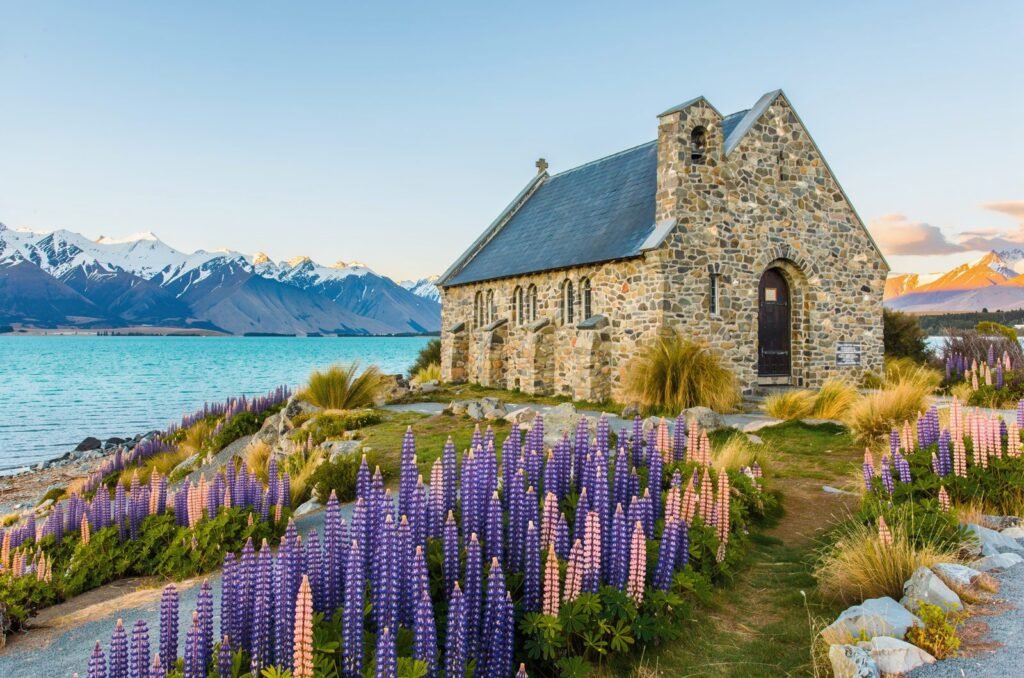
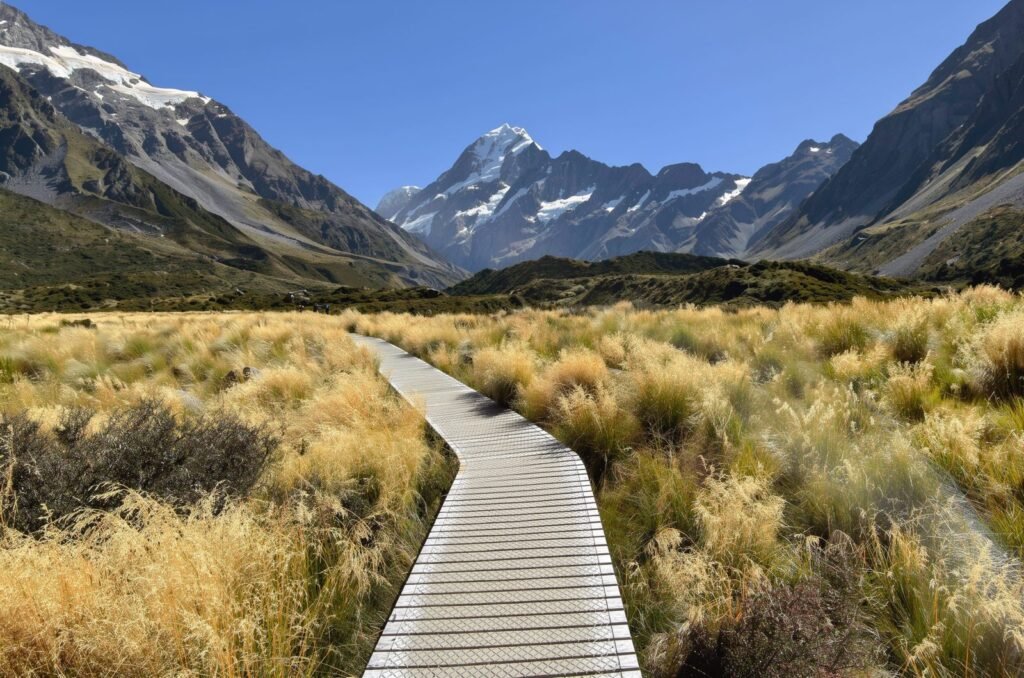
Lake Tekapo is famous for its turquoise water, lupins in early summer and dark sky reserve. Nearby, the easy Hooker Valley Track leads to a glacier lake beneath Aoraki Mount Cook, New Zealand’s highest mountain.
Queenstown and Wanaka
Queenstown is the adventure capital of the world, with bungy jumping, jet boating, skiing and wine tasting in Central Otago. Wanaka is the quieter lakeside alternative.

Milford Sound and Fiordland
Fiordland National Park is home to Milford Sound and Doubtful Sound, with sheer cliffs, waterfalls and seals. The drive to Milford Sound is spectacular, but a scenic flight from Queenstown saves many hours.

Christchurch, Dunedin and the east coast
Christchurch is the gateway to the Southern Alps and Kaikōura, known for whale watching. Dunedin has Scottish heritage, a beautiful railway station and albatrosses and penguins on the Otago Peninsula.


Food and where to eat
New Zealand food is built on excellent local produce: lamb, green-lipped mussels, Bluff oysters, whitebait fritters, kūmara (sweet potato) and Hokey Pokey ice cream. Try a traditional hāngī in Rotorua, fish and chips on the beach and a pavlova for dessert. The country is also famous for Sauvignon Blanc from Marlborough and Pinot Noir from Central Otago, and the flat white coffee is taken very seriously.


Recommended restaurants
- Fergburger, Queenstown: legendary burgers, worth the queue.
- Amisfield, Queenstown: a winery restaurant with a celebrated tasting menu.
- Sidart, Auckland: inventive fine dining in Ponsonby.
Where to stay
- Huka Lodge, Taupō: a world-famous luxury lodge on the Waikato River.
- Eichardt’s Private Hotel, Queenstown: a boutique hotel on the lakefront.
- Blanket Bay, Glenorchy: a luxury alpine lodge near Queenstown.
- Hapuku Lodge, Kaikōura: treehouse suites between the mountains and the sea.
- The Marlborough Lodge, Blenheim: a historic lodge in wine country.
Compare prices: check current rates for hotels in Auckland, hotels in Queenstown and hotels in Rotorua on Booking.com.
Itinerary ideas
- Ten days, North Island: Auckland, the Bay of Islands, Waitomo, Rotorua, Tongariro and Wellington.
- Two weeks, South Island: Christchurch, Kaikōura, Abel Tasman, the West Coast glaciers, Wanaka, Queenstown, Milford Sound and Lake Tekapo.
- Three weeks, both islands: fly into Auckland, drive south to Wellington, take the ferry to Picton and end in Queenstown or Christchurch.
- Winter break: skiing in Queenstown and Wanaka, combined with the hot pools of Rotorua.
Practical tips
- Apply for your NZeTA in the official app: it is cheaper than the website.
- Do not underestimate driving times; plan for no more than three to four hours a day.
- Book Great Walks huts, Hobbiton and popular campervans months ahead for summer.
- Bring insect repellent for sandflies on the West Coast and in Fiordland.
- Fill up the tank before remote stretches; petrol stations can be far apart.
- Clean your boots and gear before arrival to pass biosecurity quickly.
Book your trip to New Zealand
A few services we find useful when planning a trip to New Zealand:
- Car rental: compare rental cars on Economybookings.com
- Mobile data: an eSIM for New Zealand from Airalo, handy for maps on long road trips
Some links in this section are affiliate links. If you book through them, CountryDiscover may earn a small commission at no extra cost to you.
Conclusion
New Zealand rewards travellers who slow down: give yourself time for the long drives, the changing weather and the moments when a fjord or a mountain lake takes your breath away. Sort out your NZeTA and levy before you fly, book the summer highlights early and leave room for surprises. For more inspiration, read our guides to Australia, Japan and Canada.