
Australia
Explore Australia: A Complete Travel Guide
Australia is a country the size of a continent, and it rewards travellers who plan well. In one trip you can watch the sails of the Sydney Opera House glow at dusk, snorkel over the Great Barrier Reef, sleep under the stars near Uluru and drive one of the world’s great coastal roads. Distances are huge, the seasons are reversed compared with Europe and North America, and the north and south of the country have completely different climates. This guide covers when to go, how to get in and around, what things cost in 2026, and the places and cities that deserve a spot on your itinerary.
Australia travel guide: the essentials
- Capital: Canberra. The largest cities are Sydney and Melbourne.
- Currency: Australian dollar (AUD). Cards and contactless payments are accepted almost everywhere.
- Language: English.
- Entry: most visitors need an ETA, an eVisitor or a visitor visa before they fly (see below).
- Driving: on the left.
- Time zones: three main zones on the mainland, plus daylight saving in some states but not others.
- Best for: beaches, wildlife, road trips, diving, food and wine, and outback landscapes.

Contents
- Best time to visit Australia
- Visas and entry rules
- Getting around Australia
- Travel costs in 2026
- Safety: sun, water and wildlife
- Culture and First Nations heritage
- Top places to visit
- Cities and regions
- Food and wine
- Where to stay
- Itinerary ideas
- Practical tips
Best time to visit Australia
There is no single best month for the whole country, because Australia stretches from the tropics to the cool south. Summer runs from December to February and winter from June to August.
- Sydney, Melbourne, Adelaide and Tasmania: spring (September to November) and autumn (March to May) are the most comfortable, with mild days and fewer crowds than the summer school holidays. Summer is beach season but can bring heatwaves and bushfire risk.
- Tropical north (Cairns, Darwin, the Top End): the dry season from May to October is ideal, with sunny days and lower humidity. The wet season from November to April brings heavy rain, storms and road closures, although the landscapes are at their greenest.
- Red Centre (Uluru, Alice Springs): April to September is best. Summer days often climb above 40 °C, which makes walking difficult.
- Australian Alps: the ski season runs roughly from June to September in New South Wales and Victoria.


Visas and entry rules
Almost every visitor needs permission to travel before boarding a flight to Australia. Which option you need depends on your passport:
- eVisitor (subclass 651): free, for passport holders from the European Union and a few other European countries.
- ETA (subclass 601): for passports such as the United States, Canada, the United Kingdom, Japan and several others. You apply through the official Australian ETA app, which charges an AUD 20 service fee.
- Visitor visa (subclass 600): for everyone else. After the fee increase of 1 July 2026, the tourist stream costs AUD 250 when you apply from outside Australia.
Always apply through the Department of Home Affairs or the official app, not through third-party sites that add their own fees. Australia also has strict biosecurity rules: declare food, plant material and animal products on arrival, or bin them before the check.
Getting around Australia
Domestic flights
Flying is the only realistic way to cover the big distances. Sydney to Perth takes around five hours, and Sydney to Cairns about three. Qantas, Virgin Australia and Jetstar connect all major cities, and there are direct flights to Ayers Rock Airport near Uluru.

Trains
Long-distance trains are a holiday in their own right rather than a fast way to travel. The Indian Pacific crosses the continent between Sydney and Perth, and The Ghan runs north from Adelaide through Alice Springs to Darwin. Within cities, public transport is good: in Sydney you can simply tap a contactless bank card on trains, buses and ferries.
Road trips
Renting a car or campervan is the best way to explore regions such as the Great Ocean Road, the east coast, Tasmania and Western Australia. Remember that Australians drive on the left, that distances between petrol stations can be long in the outback, and that driving at dawn and dusk is risky because of kangaroos. Many rental companies do not allow standard cars on unsealed roads.
Ferries
The Spirit of Tasmania car ferry sails between Geelong, near Melbourne, and Devonport in Tasmania. In Sydney, the ferry from Circular Quay to Manly is one of the cheapest harbour cruises you can take.
Travel costs in 2026
Australia is not a budget destination, but you can control costs by self-catering, travelling outside school holidays and booking popular tours in advance. Some reference prices for 2026:
- Sydney Opera House guided tour: AUD 50 per adult when booked in advance, AUD 55 on the day.
- Uluru-Kata Tjuta National Park pass: AUD 38 per adult for three days; under-18s enter free.
- Great Barrier Reef: day trips include an environmental management charge of AUD 8.50 per person per full day (since 1 April 2026), which goes to the Marine Park Authority.
- Departure tax: the Passenger Movement Charge of AUD 70 is included in your ticket price and rises to AUD 80 from 1 January 2027.
- Accommodation: hostel dorms from around AUD 40 to 60, mid-range hotels in Sydney and Melbourne often AUD 200 to 350 per night.
Prices in shops and restaurants include 10% GST. Tipping is not expected, although rounding up for good service is appreciated. Some restaurants add a surcharge on Sundays and public holidays.

Safety: sun, water and wildlife
Australia is a safe country to travel in, but nature deserves respect.
- Sun: UV levels are very high, even on cloudy days. Wear sunscreen, a hat and sunglasses.
- Beaches: always swim between the red and yellow flags, where lifeguards patrol. Rip currents are the biggest danger on surf beaches.
- Tropical waters: in the north, box jellyfish and other stingers are present roughly from November to May. Swim in stinger nets or wear a stinger suit, and never swim where crocodile warning signs are posted.
- Outback: carry plenty of water, tell someone your route and stay with your vehicle if it breaks down.
- Bushfires: in summer, check local fire warnings before hiking or driving through bushland.
Culture and First Nations heritage
Aboriginal and Torres Strait Islander peoples have lived on this continent for more than 60,000 years, making theirs among the oldest continuous cultures on Earth. Rock art sites in places such as Kakadu National Park and the Kimberley record stories passed down over thousands of generations. Many tours are now led by Aboriginal guides, which is one of the best ways to understand the land you are travelling through.

Modern Australian life is relaxed and outdoorsy. People are informal, first names are used quickly, and weekend life revolves around beaches, barbecues, cafés and sport, from cricket in summer to the various football codes in winter. Australian English has its own slang, so expect to hear “arvo” (afternoon), “brekkie” (breakfast) and “no worries”.
Top places to visit in Australia
Sydney Opera House and the harbour
Designed by Danish architect Jørn Utzon and opened in 1973, the Sydney Opera House is a UNESCO World Heritage Site and the country’s best-known building. Take the one-hour guided tour, watch a performance, or simply walk around the forecourt at sunset. From there, follow the harbour past Circular Quay and The Rocks to the Sydney Harbour Bridge, which you can walk across for free or climb on a guided BridgeClimb.
Bondi Beach and the coastal walk
Bondi is Sydney’s most famous beach, with surf, an ocean pool at Bondi Icebergs and a lively café scene. Do not miss the Bondi to Coogee coastal walk, about six kilometres of cliffs, coves and smaller beaches such as Tamarama and Bronte.

Great Barrier Reef
The world’s largest coral reef system stretches more than 2,000 kilometres along the coast of Queensland. Cairns and Port Douglas are the main bases for day trips to the outer reef, while Airlie Beach is the gateway to the Whitsunday Islands and the white sand of Whitehaven Beach. Choose an operator with eco-certification and follow the reef rules: do not touch or stand on coral.

Uluru and Kata Tjuta
In the heart of the Red Centre, Uluru rises about 348 metres above the desert plain. The rock is sacred to the Anangu traditional owners, and climbing it has been banned since October 2019. Instead, walk the 10.6-kilometre base walk, join a free ranger-guided walk, and watch the colours change at sunrise and sunset. The domes of Kata Tjuta, with the Valley of the Winds walk, are just as impressive. Buy your park pass online from Parks Australia before you arrive.

Great Ocean Road and the Twelve Apostles
Running along the coast of Victoria south-west of Melbourne, the Great Ocean Road passes surf towns, rainforest and koala habitat before reaching the limestone stacks known as the Twelve Apostles. Allow at least two days so you are not rushing, and visit the lookouts early or late in the day.

Cities and regions
Melbourne
Melbourne is Australia’s cultural capital, known for its laneways, coffee culture, street art and food scene. Spend time in the CBD laneways, the Queen Victoria Market, the National Gallery of Victoria and neighbourhoods such as Fitzroy and St Kilda. It is also a sports city, home to the Australian Open in January and the Melbourne Cup in November.

Brisbane and the Gold Coast
Brisbane is the sunny capital of Queensland, with a riverside lifestyle, the South Bank parklands and a free CityHopper ferry. An hour to the south, the Gold Coast offers surf beaches and theme parks, while the hinterland around Lamington and Springbrook national parks has rainforest walks and waterfalls.
Perth and Western Australia
Perth is one of the most isolated cities in the world and one of the sunniest. Highlights include Kings Park, the beaches at Cottesloe, the port of Fremantle and a day trip to Rottnest Island to meet the quokkas. Further afield, Western Australia offers the Margaret River wine region, the Ningaloo Reef and, between August and October, spectacular wildflower displays.


Adelaide and the Barossa Valley
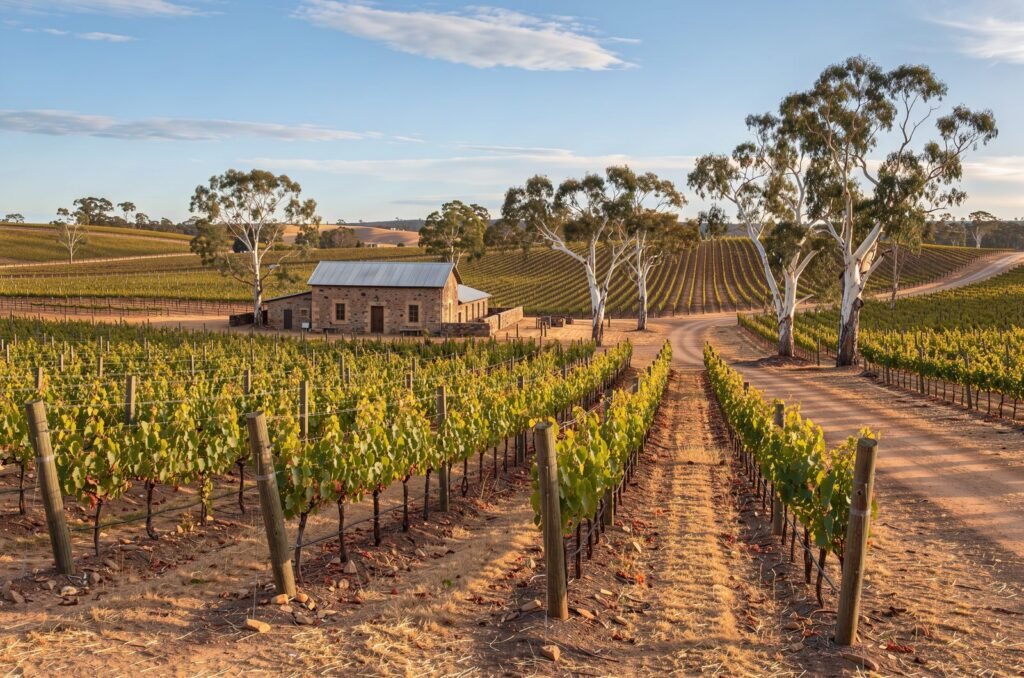
Adelaide is a relaxed, green city with good museums, the Central Market and easy access to some of Australia’s best wine regions. The Barossa Valley, about an hour north-east, is famous for Shiraz, while the Adelaide Hills, McLaren Vale and the Clare Valley are close by too. Kangaroo Island, south of the city, is one of the best places in the country to see wildlife.


Tasmania and Hobart
Tasmania, the island state south of the mainland, is a place for wilderness and good food. Hobart combines a historic harbour with the Salamanca Market every Saturday and the provocative MONA museum. Elsewhere, Cradle Mountain-Lake St Clair National Park, Freycinet’s Wineglass Bay and the Port Arthur Historic Site are the classic stops.

Darwin and the Top End
Darwin is a tropical, multicultural city and the gateway to Kakadu and Litchfield national parks. In the dry season, the Mindil Beach Sunset Market is the place to be on Thursday and Sunday evenings, with food stalls from across Asia and the Pacific and the sun setting over the Timor Sea.

Food and wine
Australian food is shaped by fresh produce, seafood and the many cultures that have settled in the country. Try a meat pie, barramundi, Moreton Bay bugs, a flat white in Melbourne, Vietnamese and Thai food in the big cities, and of course a barbecue. Native ingredients such as wattleseed, finger lime and lemon myrtle are increasingly common on menus.
Australia is also one of the world’s great wine producers. A few regional classics:
- Shiraz: Barossa Valley and McLaren Vale, South Australia.
- Cabernet Sauvignon: Coonawarra, South Australia, and Margaret River, Western Australia.
- Chardonnay: Margaret River and the Yarra Valley, Victoria.
- Riesling: Clare Valley and Eden Valley, South Australia.
Restaurants worth booking
- Bennelong, Sydney: modern Australian dining inside one of the shells of the Opera House.
- Saint Peter, Sydney: Josh Niland’s celebrated seafood restaurant, now in the Grand National Hotel in Paddington.
- Attica, Melbourne: Ben Shewry’s tasting menu built around native Australian ingredients; book well ahead.
- Flower Drum, Melbourne: a classic of Cantonese fine dining since 1975.
- Mindil Beach Sunset Market, Darwin: casual street food at sunset during the dry season.
Where to stay in Australia
- Park Hyatt Sydney: harbourside luxury with direct views of the Opera House.
- Capella Sydney: a luxury hotel in a restored sandstone government building near Circular Quay.
- Sydney Harbour YHA: a well-located hostel in The Rocks with a rooftop overlooking the harbour.
- The Langham, Melbourne: elegant five-star hotel on the Southbank promenade.
- Crystalbrook Riley, Cairns: a resort-style hotel on the Esplanade, handy for reef trips.
- Silky Oaks Lodge, Daintree: treehouse-style lodge on the edge of the Daintree Rainforest.
- Sails in the Desert, Uluru: the top hotel at Ayers Rock Resort, a short drive from the national park.
- Longitude 131°, Uluru: luxury tented pavilions with views of Uluru from your bed.
- COMO The Treasury, Perth: a boutique luxury hotel in Perth’s restored State Buildings.
- MACq 01, Hobart: a waterfront “storytelling” hotel on Hobart’s historic wharf.
Compare prices: check current rates for hotels in Sydney, hotels in Melbourne and hotels in Cairns on Booking.com.
Australia itinerary ideas
- 10 days, first visit: 4 days in Sydney (including the Blue Mountains), 3 days in Cairns for the reef and the Daintree, 3 days at Uluru.
- 2 weeks, south-east: Sydney, fly to Melbourne, drive the Great Ocean Road, then fly to Hobart for Tasmania.
- 3 weeks, classic loop: Sydney, Melbourne and the Great Ocean Road, Uluru, Cairns and the reef, ending with a few days in Brisbane or on the Whitsundays.
- West coast: Perth and Fremantle, Rottnest Island, Margaret River and a flight north to Ningaloo Reef.
Practical tips for travelling in Australia
- Do not underestimate distances: pick one or two regions rather than trying to see the whole country in two weeks.
- Book Uluru accommodation, reef trips and Opera House performances early in peak season.
- Plugs are type I with 230 V; most European travellers need an adapter.
- Mobile coverage is good in cities but patchy in the outback. Download offline maps before driving.
- Many cafés open early and close mid-afternoon, and some restaurants close on Mondays.
- Respect signs at Aboriginal cultural sites: some areas may not be photographed.
Book your trip to Australia
A few services we find useful when planning a trip to Australia:
- Tickets and tours: tickets and tours in Sydney on Tiqets
- Car rental: compare rental cars on Economybookings.com
- Mobile data: an eSIM for Australia from Airalo, so you are online as soon as you land
Some links in this section are affiliate links. If you book through them, CountryDiscover may earn a small commission at no extra cost to you.
Conclusion
Australia is a destination to plan carefully and enjoy slowly. Choose a few regions, travel in the right season for each, and leave time for the moments that make the country special: a sunset over the harbour, a morning on the reef or a quiet evening in the desert. For more long-haul inspiration, read our guides to Japan and the Maldives, or explore Europe with our guides to Italy and Greece.
