
Greece
Explore Greece: A Complete Travel Guide
Greece is where Western philosophy, theatre and democracy took shape, and it still feels like a country built for travellers. Whitewashed villages tumble down volcanic cliffs, marble temples crown the hilltops and more than 200 inhabited islands are scattered across the Aegean and Ionian Seas. In 2025 the country welcomed close to 38 million international visitors, a new record, and it is easy to see why.
This Greece travel guide brings everything together in one place: when to go, how to hop between islands, what things cost in 2026, the dishes you should not leave without tasting, and the cities, islands and ancient sites that deserve a spot on your itinerary.
Greece travel guide: the essentials
- Capital: Athens
- Language: Greek. English is widely spoken in tourist areas.
- Currency: euro (€). Cards work almost everywhere, but carry some cash for small tavernas, kiosks and island buses.
- Entry: Greece is in the Schengen area. Non‑EU travellers are registered in the new EU Entry/Exit System at the border.
- Time zone: Eastern European Time (UTC+2, UTC+3 in summer)
- Plugs: type C and F, 230 V
- Emergency number: 112
Contents
- Best time to visit Greece
- Getting around: ferries, flights and buses
- Costs, taxes and tickets in 2026
- Culture, flag and traditions
- Greek food you have to try
- Famous Greeks
- Athens and the Acropolis
- The best Greek islands
- Mainland highlights
- Greece itinerary ideas
- Practical Greece travel tips
Best time to visit Greece
For most travellers the sweet spot is late May to June and September to mid‑October. The sea is warm enough for swimming, ferries run on full schedules and the crowds and prices are lower than in high summer.
- July and August: peak season. Expect temperatures of 35 °C or more in Athens, packed beaches in Santorini and Mykonos and the strong meltemi wind in the Cyclades, which can make ferry crossings rough.
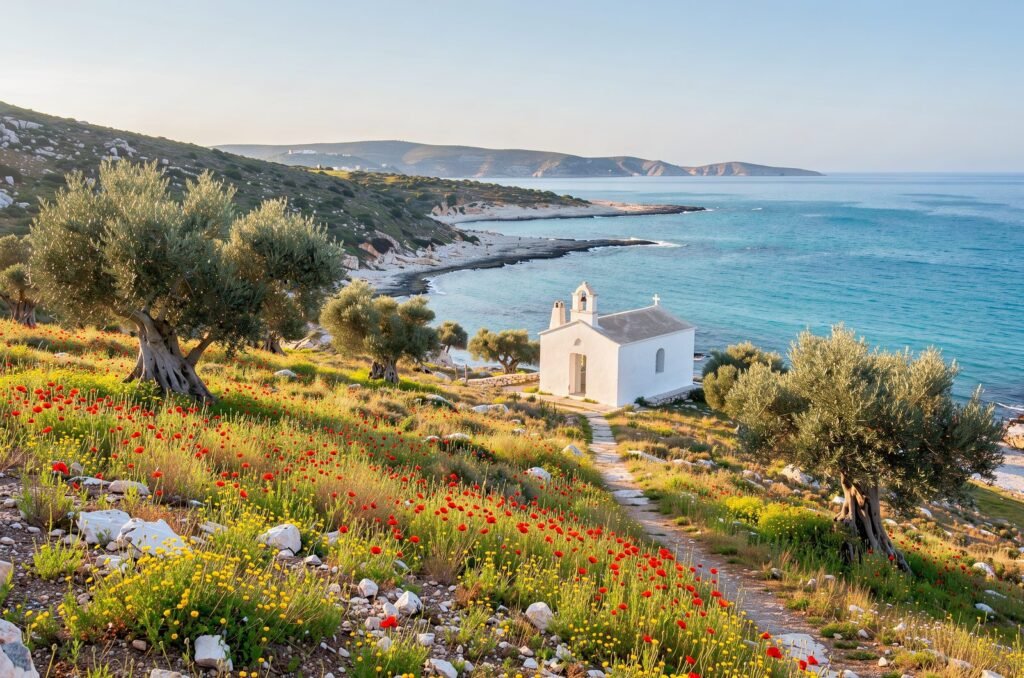
- April and early May: wildflowers, green hills and Greek Orthodox Easter, the biggest celebration of the year. Some island hotels are still closed.
- November to March: quiet and cheap, ideal for Athens, Thessaloniki, Meteora and Delphi. Many smaller islands close almost completely.
Getting around: ferries, flights and buses
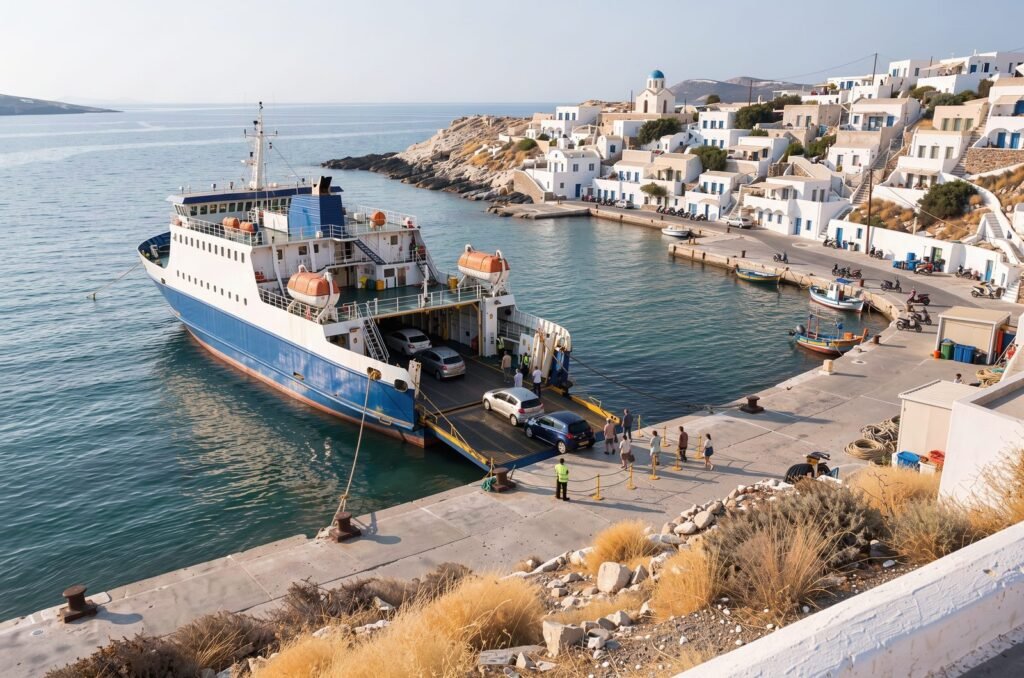
Ferries are the classic way to island‑hop. Most routes to the Cyclades leave from Piraeus or Rafina near Athens. Slow conventional ferries are cheaper and more stable in wind, while high‑speed catamarans save hours but cost more. Book ahead for July and August and keep a buffer day before an international flight, because sailings can be cancelled in bad weather.
Domestic flights connect Athens with Crete, Rhodes, Corfu, Santorini, Mykonos and Thessaloniki in about an hour, often cheaper than a long ferry ride.
On the mainland the KTEL bus network reaches Delphi, Nafplio and Meteora, and the train links Athens with Thessaloniki. A rental car gives the most freedom on Crete, the Peloponnese and larger islands, but drive carefully on narrow mountain roads.
In Athens, the metro runs from the airport to Syntagma Square in about 40 minutes and stops at Acropolis and Monastiraki, so you rarely need a taxi in the centre.
Costs, taxes and tickets in 2026
Greece is good value compared with Italy or France, but the famous islands have become expensive. A rough daily budget per person:
- Budget: €70–100 with guesthouses, gyros and buses
- Mid‑range: €150–250 with a good hotel, taverna dinners and a few ferries
- Luxury: €400+ for caldera‑view suites in Santorini or resorts in Mykonos and Crete
Hotels charge a climate resilience fee per room per night, paid on arrival. It depends on the star rating and season, and at five‑star hotels it reaches about €15 per night between April and October. Cruise passengers also pay a port fee, highest at Santorini and Mykonos in summer.
The Acropolis costs €30 for adults, and entry is by timed slot only. Buy tickets on the official Hellenic Heritage platform of the Ministry of Culture and book several days ahead in summer. EU citizens under 25 enter free with ID, and the old combined ticket for several Athens sites no longer exists.
Culture, flag and traditions
The Greek flag
The flag has nine blue and white stripes. According to popular tradition they stand for the nine syllables of the revolutionary motto “Eleftheria i Thanatos” (Freedom or Death). The white cross represents the Greek Orthodox Church.

Other national symbols are the olive branch, a sign of peace grown on Greek soil for thousands of years, the classical column and the gods and goddesses of Greek mythology, from Zeus and Athena to Apollo.
Map and geography
Greece sits at the southern tip of the Balkans with the Ionian Sea to the west, the Aegean Sea to the east and the Mediterranean to the south. About 80 percent of the country is mountainous, and the coastline is one of the longest in Europe.

Athens lies in the region of Attica. Thessaloniki is the gateway to the north, Patras to the Peloponnese and western Greece, and Heraklion to Crete. If you love the Adriatic and Mediterranean coast, also look at our guides to Croatia and Montenegro.
Currency and economy
Greece adopted the euro in 2002. The banknotes have the same design in every euro country, but the Greek coins have their own national side: the €1 coin shows the owl of ancient Athens and the €2 coin depicts the myth of Europa and the bull.
Tourism and shipping are the pillars of the economy. Greek owners control one of the largest merchant fleets in the world, and tourism generates around a fifth of national income. After the deep debt crisis of the 2010s the economy has been growing steadily again and unemployment has fallen a long way.
Traditions and filotimo
Family and community are central to Greek life. The word filotimo describes a mix of honour, duty and generosity, and you will feel it in the way guests are treated. Religious festivals mark the calendar: Easter, with candlelit processions and fireworks at midnight, and the many village panigyria in summer, with music, dancing and long tables of food.
Traditional Greek dance
Tsamiko is a proud, powerful dance performed in a line, with the leader showing off high leaps and turns.

Kalamatianos, named after the city of Kalamata, is the joyful line dance you will see at almost every wedding and festival.

Zeibekiko is an improvised solo dance full of emotion, traditionally danced by men while friends kneel and clap around them.

Greek food you have to try
Greek cooking is simple and seasonal: olive oil, lemon, herbs, ripe tomatoes, fresh fish and slow‑cooked meat. Order several plates to share and eat late, as locals rarely sit down for dinner before 9 pm.
Moussaka
Layers of fried aubergine, spiced minced meat and a thick béchamel crust, baked until golden. The touch of cinnamon and nutmeg makes it unmistakably Greek.

Souvlaki and gyros
Grilled skewers or shaved meat wrapped in warm pita with tomato, onion, fries and tzatziki. It is the best cheap meal in Greece and usually costs a few euros.

Dolmades
Vine leaves rolled around rice, herbs and sometimes pine nuts or minced meat, simmered in lemony broth and served as part of a meze spread.

Also try a real Greek salad with a slab of feta, spanakopita, grilled octopus with ouzo, Cretan dakos, loukoumades with honey and a thick Greek coffee or an iced freddo espresso.
Famous Greeks
Yanni
The composer and pianist from Kalamata became world famous with his instrumental concerts, including the legendary 1993 performance at the Acropolis.

Nia Vardalos
The Greek‑Canadian actress and screenwriter wrote and starred in “My Big Fat Greek Wedding”, based on her own family, and turned it into one of the most successful romantic comedies ever made.

Costa‑Gavras
The director born near Corinth made award‑winning political thrillers such as “Z” and “Missing” and won Academy and Cannes awards.

Ioannis Ikonomou
Ikonomou is a translator at the European Commission who became internationally known as one of the world’s most remarkable polyglots, speaking and reading dozens of languages.

Athens and the Acropolis
Athens is noisy, warm and endlessly fascinating, a capital where ancient ruins sit between street art, rooftop bars and neighbourhood tavernas. Give it at least two full days before you head to the islands.

Start early at the Acropolis, ideally in the first slot after opening, to beat the heat and the cruise groups. The Parthenon, built in the 5th century BC for the goddess Athena, the Erechtheion with its Caryatids and the Propylaea gateway make this the most famous archaeological site in Europe. Below the hill, the modern Acropolis Museum displays the original sculptures; it needs a separate ticket.

Afterwards, walk the pedestrian promenade to the Ancient Agora and the Temple of Olympian Zeus, wander the old lanes of Plaka and Anafiotika, browse the Monastiraki flea market and finish with a sunset on Lycabettus Hill. In summer, catch a concert or play in the 2nd‑century Odeon of Herodes Atticus, and don’t skip the National Archaeological Museum.
Best hotels in Athens
- Hotel Grande Bretagne: the grand dame on Syntagma Square since 1874, with a rooftop restaurant facing the Acropolis.
- AthensWas: design hotel a short walk from the Acropolis Museum, with a rooftop terrace.
- New Hotel: art hotel near Syntagma with playful interiors.
- COCO‑MAT Athens Jumelle: calm, eco‑minded hotel known for its natural‑material beds.
- Grecotel Pallas Athena: art boutique hotel on Kotzia Square, decorated with graffiti and collectible design.
Compare prices: check current rates for hotels in Athens and hotels on Santorini on Booking.com.
Best restaurants in Athens
- Matsuhisa Athens: Nobu Matsuhisa’s Japanese‑Peruvian cuisine by the sea on the Athens Riviera in Vouliagmeni.
- Nolan: small, creative Greek‑Japanese restaurant near Syntagma.
- Karamanlidika: deli and meze restaurant in the central market area, famous for cured meats and cheeses.
- Varoulko Seaside: chef Lefteris Lazarou’s Michelin‑starred seafood restaurant on the Mikrolimano marina in Piraeus.
- Spondi: refined French‑Greek fine dining in Pangrati, one of the city’s most decorated restaurants.
The best Greek islands
Santorini
Santorini is the rim of a sunken volcano, and the view over the caldera from Oia, Imerovigli or Fira is unforgettable. Watch the sunset from a quieter spot than Oia castle, hike the cliff path from Fira to Oia (about 10 km), swim on the red and black beaches and taste Assyrtiko wine at a local winery. Visit the Bronze Age town of Akrotiri, preserved under volcanic ash.

Mykonos
Mykonos is the glamorous party island, with beach clubs at Paradise and Psarou, international DJs and late nights in Little Venice. Away from the clubs you will find the windmills of Kato Mili, quiet coves in the north and a maze of whitewashed lanes in Chora.

Delos
Just 30 minutes by boat from Mykonos lies Delos, the mythical birthplace of Apollo and Artemis and one of the most important sanctuaries of the ancient world. The whole island is an open‑air museum with the Terrace of the Lions, the remains of houses with mosaic floors and the ancient theatre. Overnight stays are not allowed, so plan a morning trip and bring water and a hat.

Crete
Greece’s largest island could fill a whole holiday. Explore the Venetian harbours of Chania and Rethymno, hike the Samaria Gorge (open from spring to autumn), swim at the pink sands of Elafonisi and the lagoon of Balos and taste Cretan raki in mountain villages.

Near Heraklion lies the Palace of Knossos, the ceremonial and political centre of the Minoan civilisation and the largest Bronze Age site on the island. Combine it with the Heraklion Archaeological Museum, home to the original frescoes.

Best hotels in Crete
- Domes Noruz Chania: stylish beachfront hotel with private‑pool suites.
- Abaton Island Resort & Spa: five‑star resort in Hersonissos with a strong spa.
- St. Nicolas Bay Resort Hotel & Villas: classic luxury on Mirabello Bay in Agios Nikolaos.
- Blue Marine Resort & Spa: family‑friendly all‑inclusive resort on the bay at Ammoudara, about 6 km from Agios Nikolaos.
- The Royal Blue Resort: beachfront resort near the village of Panormo between Rethymno and Heraklion, with dozens of pools and private‑pool rooms.
Compare prices: check current rates for hotels on Crete on Booking.com.
Best restaurants in Crete
- Nostos: Cretan cooking with local ingredients in Chania.
- Dounias: farm‑to‑table taverna in the mountain village of Drakona, where everything is cooked in clay pots over a wood fire.
- Ferryman: waterfront taverna in Elounda, named after the 1970s TV series filmed here, with views towards Spinalonga.
- Thalassino Ageri: seasonal fish taverna by the sea in Halepa, Chania, loved for its sunset tables.
Rhodes
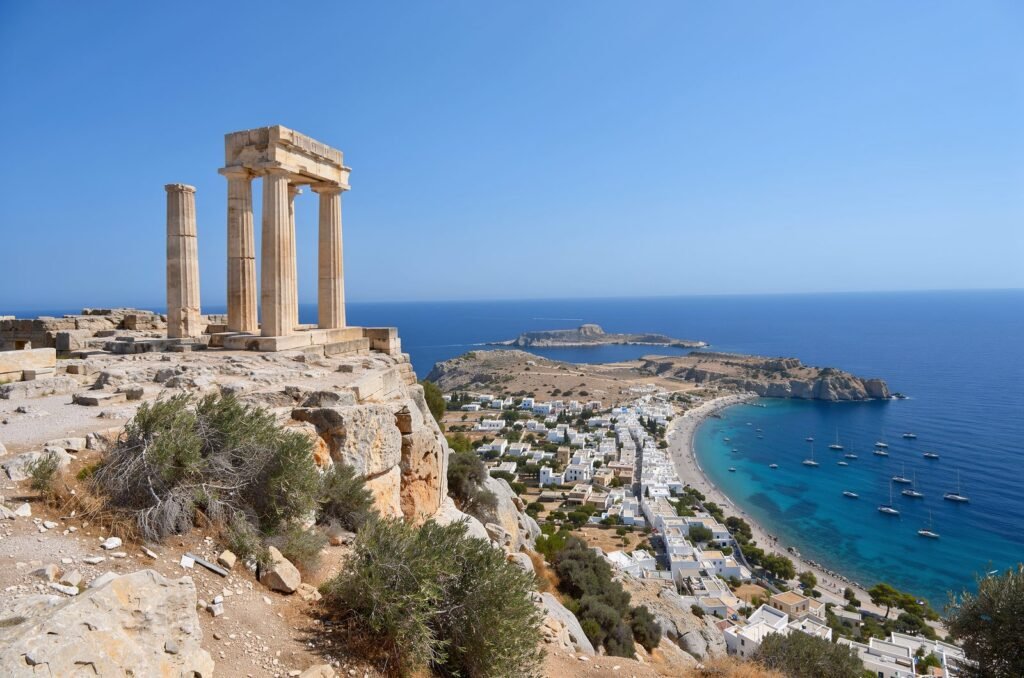
The medieval Old Town of Rhodes is a UNESCO World Heritage Site and one of the best‑preserved fortified cities in Europe. Walk the Street of the Knights to the Palace of the Grand Master, explore the Archaeological Museum and stroll the old walls. Then head south to Lindos, where the white village climbs up to an ancient acropolis above two turquoise bays.

Best hotels in Rhodes
- Lindos Blu: adults‑only luxury hotel on the hillside above Vlicha Bay.
- Electra Palace Rhodes: five‑star beachfront resort in Ialyssos on the west coast, close to the airport and Rhodes Town.
- Labranda Royal Apollonia: modern beach hotel in Ialyssos.
- Mitsis La Vita Beach Hotel: all‑inclusive beachfront hotel, good for families.
- Elite Suites by Rhodes Bay: all‑suite hotel with private pools on Ixia Bay, about 4 km from Rhodes Town.
Compare prices: check current rates for hotels on Rhodes on Booking.com.
Best restaurants in Rhodes
- Mavrikos: on the main square of Lindos, run by the Mavrikos family since 1933 and one of the most celebrated restaurants on the island.
- Five Senses: romantic, candlelit fine dining at Lindos Blu with views over the bay.
Tip: in Rhodes Old Town, the quieter side streets away from Sokratous Street offer better value tavernas.
Corfu
Green, elegant Corfu shows a different side of Greece. Its UNESCO‑listed Old Town mixes Venetian, French and British architecture, with arcaded streets, the Liston promenade and two fortresses.

Along the coast you will find the cliffs and coves of Paleokastritsa and the long sandy beaches of the west, ideal for swimming and snorkelling.

Inland, olive groves, cypress trees and hill villages invite you to hike or drive the island’s mountain roads to Mount Pantokrator.

Mainland highlights
Thessaloniki
Greece’s second city is a relaxed, student‑filled place with the best food scene in the country. Walk the seafront to the White Tower, see Roman and Byzantine monuments that are part of a UNESCO site, and visit the Archaeological Museum and the Museum of Byzantine Culture. Eat your way through the Modiano and Kapani markets, where Greek, Ottoman and Sephardic Jewish traditions meet.

Delphi
On the slopes of Mount Parnassus, the ancient Greeks believed they had found the centre of the world. Here the Oracle of Apollo gave prophecies to kings and city‑states. Follow the Sacred Way past the treasuries built by Greek cities to the Temple of Apollo, the theatre and the stadium, then visit the round Tholos in the sanctuary of Athena Pronaia and the excellent museum with the bronze Charioteer. Delphi is an easy day trip from Athens, about 2.5 hours by car or bus.

Meteora
Meteora, meaning “suspended in the air”, is a UNESCO World Heritage Site where monasteries sit on top of giant sandstone pillars in central Greece. Monks began building here in the 14th century, and six monasteries are still active. Each has different closing days, so check before you go, and dress modestly: covered shoulders, and long skirts for women, which are often available at the entrance. Stay a night in Kalambaka or Kastraki to see the rocks at sunrise, and try a hike or climbing tour.

Nafplio
The first capital of modern Greece is one of its prettiest towns, with neoclassical mansions, bougainvillea‑covered lanes and a seafront promenade along the Argolic Gulf. Climb the steps to the Palamidi fortress for the view and use Nafplio as a base for Mycenae and the ancient theatre of Epidaurus.

Olympia
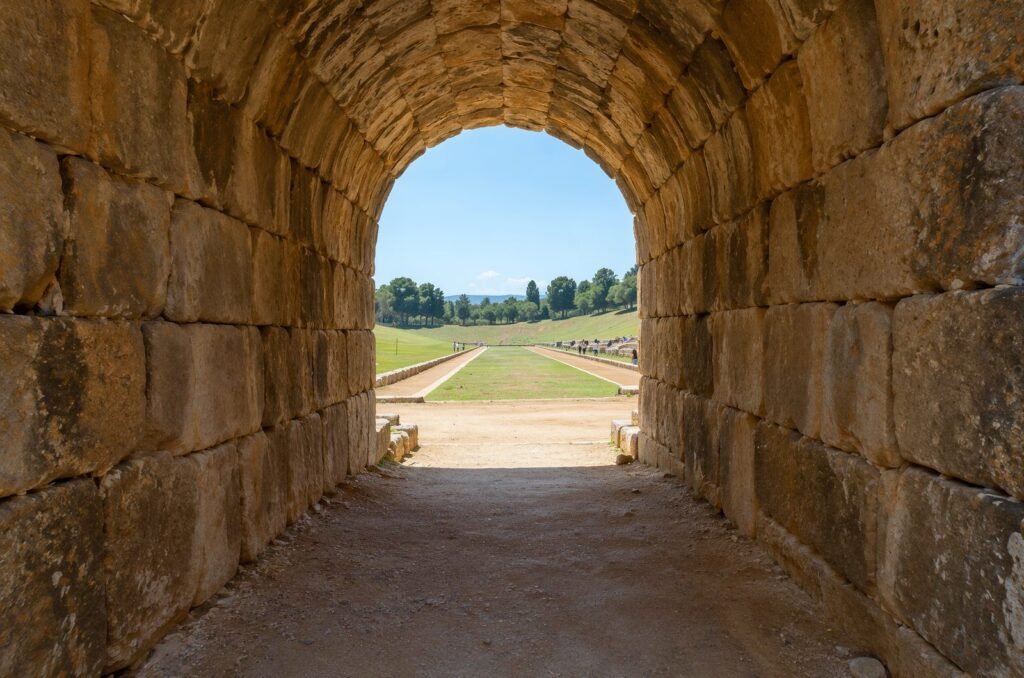
In the green valley of Olympia, the ancient Olympic Games were held in honour of Zeus, traditionally from 776 BC. Walk through the stone tunnel into the stadium, see the remains of the temples of Zeus and Hera and visit the museum. Winners received a simple olive wreath, still a symbol of victory today, and the Olympic flame is lit here before every modern Games.
Mount Olympus
Mount Olympus in northern Greece is the country’s highest mountain at 2,918 metres and, according to myth, the home of Zeus and the Olympian gods. From the town of Litochoro, trails lead through the Enipeas gorge and forests to mountain refuges. Reaching the summit takes two days and is best in summer and early autumn.

Greece itinerary ideas
- 7 days: 2 days Athens, 2 days Naxos or Paros, 3 days Santorini.
- 10 days: 2 days Athens, day trip to Delphi, 3 days Mykonos with Delos, 3 days Santorini, fly back.
- 14 days: 2 days Athens, 2 days Nafplio and the Peloponnese, 2 days Meteora, then fly to Crete for 5 days and finish with 3 days in Santorini.
Practical Greece travel tips
- Book the Acropolis, popular ferries and Santorini hotels well in advance for June to September.
- Many museums and sites are closed or close early on public holidays; check opening hours before you go.
- Tipping is not obligatory, but rounding up or leaving 5–10% in restaurants is appreciated.
- Tap water is safe in Athens and many places on the mainland; on several islands locals drink bottled water.
- Use high‑factor sunscreen and avoid hiking or visiting exposed sites in the midday heat of July and August.
- Respect wildfire warnings in summer and never light fires outdoors.
- Do not flush toilet paper in older buildings and on many islands; use the bin provided.
Book your trip to Greece
A few services we find useful when planning a trip to Greece:
- Tickets and tours: skip-the-line tickets and tours in Athens on Tiqets
- Car rental: compare rental cars on Economybookings.com
- Mobile data: an eSIM for Greece from Airalo, so you are online as soon as you land
Some links in this section are affiliate links. If you book through them, CountryDiscover may earn a small commission at no extra cost to you.
Conclusion
Greece rewards every kind of traveller: history lovers in Athens, Delphi and Olympia, beach lovers on Crete and the Cyclades, food lovers in Thessaloniki and anyone who simply wants to watch the sun set over the Aegean with a glass of local wine. Use this Greece travel guide to pick your season, plan your ferries and choose a mix of islands and mainland that fits your style.

Want to combine your trip with another Mediterranean destination? Read our guides to Italy, Turkey and Croatia, or explore every country on our interactive world map.