
India
Explore India: A Complete Travel Guide
India is a country that engages every sense. In one trip you can see the Taj Mahal at sunrise, ride through the desert cities of Rajasthan, drift along the backwaters of Kerala, watch evening prayers on the ghats of Varanasi and relax on the beaches of Goa. With 28 states, more than 20 official languages and a cuisine that changes every few hundred kilometres, India rewards travellers who plan well and take their time. This guide covers the best time to visit, the e-Visa, getting around, costs, safety, culture, the top places to visit, food and where to stay.
India travel guide: the essentials
- Capital: New Delhi. The largest cities are Mumbai and Delhi.
- Currency: Indian rupee (INR). UPI mobile payments are everywhere; cards are accepted in hotels and larger restaurants, but carry cash for small shops and rickshaws.
- Languages: Hindi and English are the official languages of the central government; every state has its own language as well.
- Entry: most travellers can apply online for an e-Tourist Visa before departure.
- Electricity: 230 V with type C, D and M plugs.
- Best for: history and architecture, spiritual places, food, wildlife, yoga and Ayurveda, beaches and the Himalayas.

Contents
- Best time to visit India
- e-Visa and entry rules
- Getting around India
- Travel costs in 2026
- Safety and health
- Culture, festivals and etiquette
- Top places to visit
- The regions at a glance
- Indian food and where to eat
- Where to stay
- Itinerary ideas
- Practical tips
Best time to visit India
- October to March: the best time for most of the country, including Delhi, Agra, Rajasthan, Varanasi, Goa and Kerala. Days are warm and dry; nights in the north can be cold in December and January.
- April to June: very hot in the plains, often above 40°C. This is the best season for the Himalayan hill stations.
- June to September: the monsoon brings heavy rain to most of India. Kerala and the Western Ghats are lush and green, and it is the season for Ladakh and Spiti, which lie in the rain shadow of the Himalayas.
Air pollution in Delhi and other northern cities is often severe from November to January, so check the air quality index if you are sensitive to it.
e-Visa and entry rules
- e-Tourist Visa: citizens of more than 160 countries can apply on the official portal indianvisaonline.gov.in. There are three options: 30 days (double entry), one year and five years (both multiple entry).
- Fees: fees depend on your nationality. For many countries the 30-day e-Visa costs US$25 from July to March and US$10 from April to June, the one-year visa US$40 and the five-year visa US$80 to US$200, plus a small bank charge.
- Length of stay: with a one-year or five-year e-Visa, your total stay may not exceed 180 days per calendar year; most nationalities can stay up to 90 days per visit.
- Apply in time: apply at least four days before arrival and use only the official government portal; many look-alike sites charge much higher fees.
- Restricted areas: some border regions, parts of the northeast, Ladakh and the Andaman Islands require an additional permit for foreigners.
Getting around India
- By train: Indian Railways is one of the largest networks in the world and a great way to travel. Book air-conditioned classes (1A, 2A, 3A or Chair Car) in advance on the IRCTC website or app, as trains sell out quickly. The fast Vande Bharat and Shatabdi trains link major cities.
- By plane: domestic flights are cheap and save a lot of time on long distances, for example Delhi to Goa or Mumbai to Kochi.
- By car with driver: hiring a car with a driver is affordable and the most comfortable way to tour Rajasthan or Kerala. Self-driving is not recommended for first-time visitors.
- In the cities: Delhi, Mumbai, Bengaluru and other big cities have modern metro systems. Ride-hailing apps such as Uber and Ola avoid haggling with taxi and auto-rickshaw drivers.

Travel costs in 2026
India is good value, although prices in the big cities and at luxury hotels are rising.
- Accommodation: a simple guesthouse costs about ₹1,000 to ₹2,500 a night, a good mid-range hotel ₹4,000 to ₹9,000, and the famous palace hotels much more.
- Food: a thali or street-food meal costs ₹100 to ₹300, a meal in a good restaurant ₹800 to ₹2,000 per person.
- Sights: foreign visitors pay higher entrance fees at monuments. The Taj Mahal costs ₹1,100 for foreigners, plus ₹200 to enter the main mausoleum, and is closed on Fridays.
- Daily budget: plan on about €30 to €50 per person a day for budget travel and €80 to €150 for comfortable mid-range travel with a driver.
Safety and health
Millions of travellers visit India every year without problems: around nine million foreign tourists arrived in 2025. Still, it pays to be prepared.
- Scams: be wary of people who say your hotel is closed, offer “government” tourist offices or insist on a shop visit. Book trains, tours and taxis through official channels or apps.
- Women travellers: dress modestly, avoid walking alone late at night and use registered taxis or ride-hailing apps.
- Traffic: roads are chaotic. Cross with care and avoid long road journeys at night.
- Health: drink bottled or filtered water, eat freshly cooked food and wash your hands often. Ask your doctor or a travel clinic about vaccinations and malaria prevention well in advance.
- Emergency number: 112.
Culture, festivals and etiquette
India is home to Hindus, Muslims, Sikhs, Christians, Buddhists and Jains, and religion plays a visible role in daily life. Classical dance forms such as Bharatanatyam and Kathak, Bollywood films and cricket are national passions.
- Etiquette: remove your shoes before entering temples and homes, cover shoulders and knees at religious sites, and use your right hand for eating and giving or receiving things.
- Greeting: a “namaste” with palms pressed together is always appropriate.
- Festivals: Diwali, the festival of lights, takes place in October or November; Holi, the festival of colours, is celebrated in March. The dates follow the lunar calendar and change every year.


Top places to visit in India
Delhi
India’s capital combines Mughal monuments such as the Red Fort, Humayun’s Tomb and the Qutub Minar with the bazaars of Old Delhi and the wide avenues of New Delhi.

Agra and the Taj Mahal
The white marble mausoleum built by Shah Jahan for his wife Mumtaz Mahal is at its most beautiful at sunrise. Combine it with Agra Fort and the abandoned city of Fatehpur Sikri.
Jaipur
The Pink City is home to the Hawa Mahal, the City Palace, the Amber Fort and the Jantar Mantar observatory. Together with Delhi and Agra it forms the Golden Triangle.

Udaipur and Jaisalmer
Udaipur, the city of lakes, is famous for its romantic palaces; Jaisalmer, the golden city, rises from the Thar Desert and is the base for camel safaris.


Varanasi
One of the oldest living cities in the world. Take a boat on the Ganges at dawn and watch the evening Ganga Aarti ceremony on the ghats.

Amritsar
The Golden Temple, the holiest site of Sikhism, welcomes visitors of all faiths and serves free meals to tens of thousands of people every day.

Mumbai
India’s financial capital and the home of Bollywood, with colonial architecture, the Gateway of India, Marine Drive and a great food scene.
Goa
Beaches, Portuguese colonial churches and a relaxed atmosphere. North Goa is lively; South Goa is quieter.

Kerala
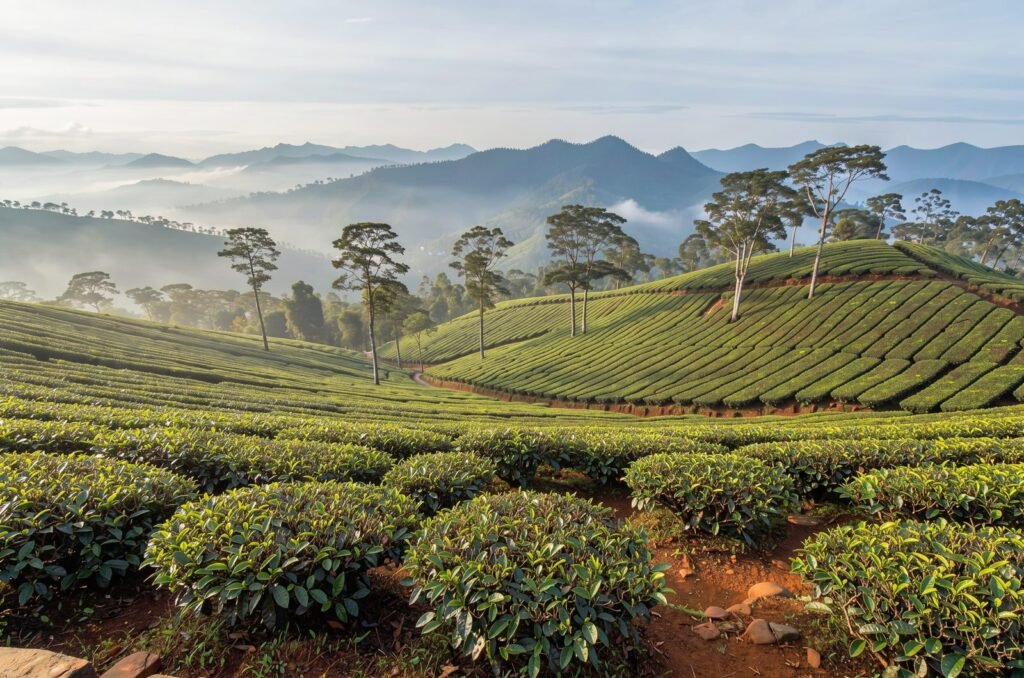
Cruise the backwaters on a houseboat, visit the tea plantations of Munnar and see the historic port of Kochi.

Hampi
The ruins of the Vijayanagara Empire, a UNESCO World Heritage Site, lie among giant boulders in Karnataka.

Ladakh
High-altitude deserts, Buddhist monasteries and spectacular mountain passes in the Himalayas. Allow time to acclimatise in Leh.

The regions at a glance
- North India: Delhi, Agra, Varanasi, Amritsar and the Himalayan states.
- Rajasthan: forts, palaces and desert cities such as Jaipur, Jodhpur, Udaipur and Jaisalmer.
- West India: Mumbai, Goa and Gujarat.
- South India: Kerala, Tamil Nadu and Karnataka, with temples, backwaters, beaches and spicy food.
- East and northeast: Kolkata, Darjeeling, Sikkim and the less visited states of the northeast.
Indian food and where to eat
Indian cuisine varies enormously by region. In the north, try butter chicken, dal makhani and freshly baked naan; in the south, dosa, idli and coconut curries; in Hyderabad and Lucknow, fragrant biryani. Finish with sweets such as gulab jamun, and drink a cup of masala chai. Many Indians are vegetarian, so vegetarian food is excellent everywhere.


Recommended restaurants
- Indian Accent, New Delhi: creative modern Indian cuisine.
- Bukhara, ITC Maurya, New Delhi: legendary for its tandoori dishes and dal Bukhara.
- Karim’s, Old Delhi: Mughlai cooking near the Jama Masjid since 1913.
- Britannia & Co., Mumbai: a historic Parsi café known for its berry pulao.
Where to stay
India has some of the most spectacular hotels in the world, including former maharaja palaces, as well as simple guesthouses and homestays.
- The Leela Palace New Delhi and The Imperial, Delhi: luxury and colonial heritage in the capital.
- ITC Maurya, Delhi: home of the Bukhara restaurant.
- The Oberoi Amarvilas, Agra: every room has a view of the Taj Mahal.
- Rambagh Palace, Jaipur: the former residence of the Maharaja of Jaipur.
- Taj Lake Palace, Udaipur: a white marble palace in the middle of Lake Pichola.
- The Taj Mahal Palace, Mumbai: the iconic hotel opposite the Gateway of India.
Compare prices: check current rates for hotels in New Delhi, hotels in Jaipur and hotels in Goa on Booking.com.
Itinerary ideas
- One week, the Golden Triangle: Delhi (2 days), Agra (1 to 2 days) and Jaipur (2 to 3 days).
- Two weeks, Rajasthan and Varanasi: the Golden Triangle plus Udaipur, Jodhpur or Jaisalmer, ending with a flight to Varanasi.
- Two weeks, South India: Kochi, Munnar, the backwaters of Alleppey and the beaches of Varkala or Goa.
- Ten days, the Himalayas (summer): Leh and the monasteries of Ladakh, Nubra Valley and Pangong Lake.
Practical tips
- Apply for your e-Visa only on the official government portal.
- Book long-distance trains well in advance.
- Carry small notes and coins for tips, rickshaws and markets.
- Buy a local SIM or an eSIM; many services, including UPI payments and ride-hailing, work best with an Indian number.
- Dress modestly, especially at religious sites.
- Book the Taj Mahal and other major monuments online to skip the ticket queue.
- Take it slow: distances are large and travel takes longer than you expect.
Book your trip to India
A few services we find useful when planning a trip to India:
- Hotels: compare hotels in New Delhi on Booking.com
- Mobile data: an eSIM for India from Airalo, so you are online as soon as you land
Some links in this section are affiliate links. If you book through them, CountryDiscover may earn a small commission at no extra cost to you.
Conclusion
India is intense, colourful and endlessly fascinating. Travel between October and March, choose one or two regions instead of trying to see everything, and prepare your e-Visa in advance, and you will experience a country of palaces, temples, mountains and some of the best food in the world. For more inspiration, read our guides to Thailand, Indonesia and the United Arab Emirates.