
Iceland
Explore Iceland: A Complete Travel Guide
Iceland is a land of fire and ice: volcanoes and lava fields, glaciers and ice caves, geysers, hot springs, black sand beaches and hundreds of waterfalls, all on an island in the North Atlantic just below the Arctic Circle. In summer the sun barely sets; in winter the northern lights dance across the sky. Reykjavík is a small but lively capital, and the Ring Road takes you around the whole island. This guide covers when to go, entry rules, getting around, costs, safety, culture, the top places to visit, food and where to stay.
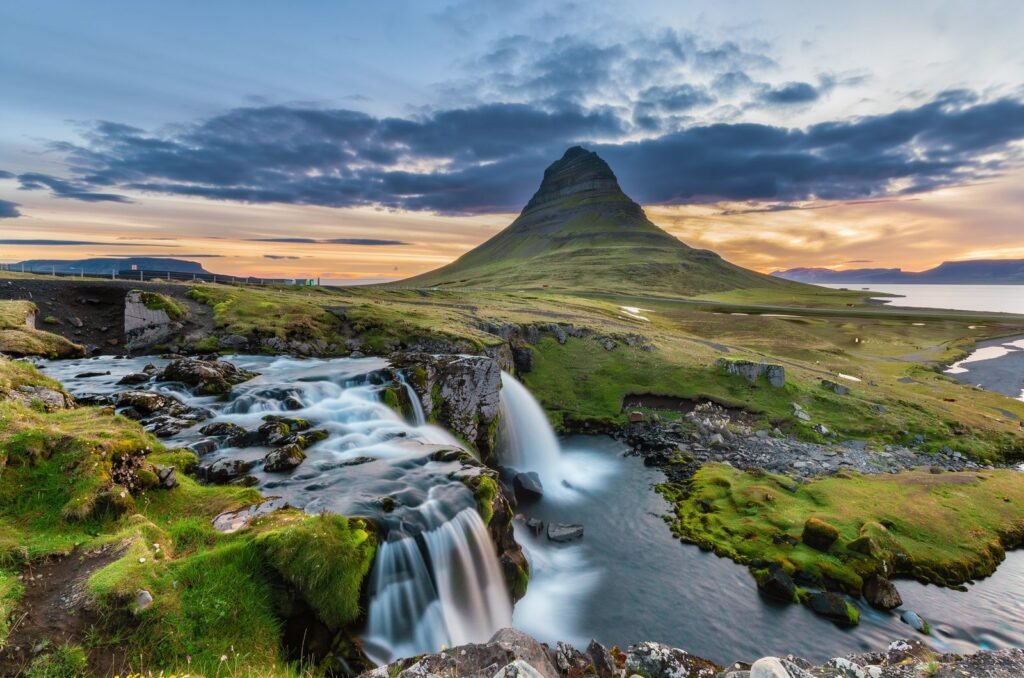
Iceland travel guide: the essentials
- Capital: Reykjavík, home to about two-thirds of the population. The second town is Akureyri in the north.
- Currency: Icelandic króna (ISK). Iceland is almost cashless; cards are accepted everywhere, even for small amounts.
- Language: Icelandic; nearly everyone speaks excellent English.
- Entry: Iceland is not in the EU but is part of the Schengen Area.
- Electricity: 230 V with type C and F plugs.
- Best for: road trips, waterfalls, glaciers, hot springs, the northern lights, whale watching and hiking.

Contents
- Best time to visit Iceland
- Entry rules
- Getting around Iceland
- Travel costs in 2026
- Safety, weather and volcanoes
- Culture and traditions
- Top places to visit
- Reykjavík and other towns
- Icelandic food and where to eat
- Where to stay
- Itinerary ideas
- Practical tips
Best time to visit Iceland
- Summer (June to August): mild temperatures (10 to 15°C), the midnight sun and access to the highlands and most hiking trails. This is the busiest and most expensive season.
- Shoulder seasons (May and September to October): fewer visitors, lower prices and, from September, the first northern lights.
- Winter (November to March): the best time for the northern lights and ice caves, but with only four to five hours of daylight in December and challenging driving conditions.
Entry rules
- EU and EEA citizens: can travel with a valid passport or national ID card.
- Other visitors: the Schengen rules apply. Many nationalities, including US, UK, Canadian and Australian citizens, can stay up to 90 days in any 180-day period without a visa.
- EES: non-EU travellers have their fingerprints and a facial image registered at the Schengen border.
- ETIAS: the planned European travel authorisation is not yet in operation and has no confirmed start date.
Getting around Iceland
- By rental car or campervan: the best way to explore. The Ring Road (Route 1) circles the island in about 1,330 km. Mountain roads marked “F” are only open in summer and require a 4×4 by law. Check road.is and the weather before every drive.
- By tour: day tours from Reykjavík cover the Golden Circle, the south coast, glacier hikes and northern lights hunts.
- By bus: the Flybus links Keflavík airport with Reykjavík; public buses (Strætó) reach some towns, but services are limited.
- By plane: domestic flights connect Reykjavík with Akureyri, Egilsstaðir and Ísafjörður.
Travel costs in 2026
Iceland is one of the most expensive countries in the world to visit.
- Accommodation: a guesthouse room costs about ISK 20,000 to 35,000 a night and a mid-range hotel ISK 35,000 to 60,000, more in summer.
- Food: a main course in a restaurant costs ISK 4,500 to 7,500; supermarkets such as Bónus and Krónan are much cheaper.
- Car rental: often the biggest expense; book early for summer and choose a 4×4 for winter or the highlands.
- Taxes: an accommodation tax is charged per night, and cruise passengers pay an infrastructure fee per day in Iceland.
- Daily budget: plan on about €120 to €180 per person a day for budget travel and €250 to €350 for mid-range travel.
Safety, weather and volcanoes
Iceland has very little crime, but nature demands respect. Weather can change within minutes, and strong winds can rip car doors off their hinges. Never ignore closed roads or warning signs, keep well away from the waves at Reynisfjara, where sneaker waves have swept people out to sea, and only walk on glaciers or enter ice caves with a certified guide. Register your trip and check the latest alerts on Safetravel.is.
Since 2023, a series of volcanic eruptions has taken place on the Sundhnúkur crater row near Grindavík on the Reykjanes peninsula. Eruptions are localised, and Keflavík airport and the main tourist routes have continued to operate, but the area around Grindavík and the Blue Lagoon can close at short notice. Check the official status before visiting. The emergency number is 112.
Culture and traditions
Icelanders are proud of their Viking heritage, their sagas and their language, which has changed little in a thousand years. Bathing in geothermal pools is a national pastime: shower thoroughly without a swimsuit before entering, as required in every pool. Traditional turf houses and folk costumes can be seen in open-air museums, and Icelanders celebrate with festivals such as Þorrablót in winter, when traditional foods are served.

Top places to visit in Iceland
The Golden Circle
A popular day trip from Reykjavík: Þingvellir National Park, where you can see the rift between the North American and Eurasian plates, the Strokkur geyser, which erupts every few minutes, and the Gullfoss waterfall.
The south coast
Seljalandsfoss (you can walk behind it), Skógafoss, the black sand beach of Reynisfjara with its basalt columns, and the village of Vík.

Vatnajökull National Park and Jökulsárlón
Europe’s largest glacier, with ice caves in winter, glacier hikes, Skaftafell and the glacier lagoon of Jökulsárlón, where icebergs drift out to the Diamond Beach.


The Blue Lagoon and other hot springs
The milky-blue Blue Lagoon near the airport is the most famous geothermal spa, but Sky Lagoon in Reykjavík and the Mývatn Nature Baths in the north are excellent alternatives. Always book in advance.

The north: Mývatn, Dettifoss and Húsavík
Lava formations and pseudo-craters around Lake Mývatn, the thundering Dettifoss, Goðafoss, and whale watching from Húsavík.


The Snæfellsnes peninsula
Often called “Iceland in miniature”, with the Snæfellsjökull glacier, Kirkjufell mountain, lava fields and fishing villages.
The Westfjords
Remote fjords, the Dynjandi waterfall and the red sand beach of Rauðasandur, best visited in summer.


The northern lights
Visible from late August to April on clear, dark nights. Get away from city lights and check the aurora and cloud forecast from the Icelandic Met Office.

Reykjavík and other towns
Reykjavík
The world’s northernmost capital has the Hallgrímskirkja church, the Harpa concert hall, colourful houses, museums, cafés and a lively nightlife.

Akureyri
The capital of the north, with botanical gardens, a ski area and easy access to Mývatn and Goðafoss.

Ísafjörður and Húsavík
Ísafjörður is the main town of the Westfjords, and Húsavík is known as the whale watching capital of Iceland.


Icelandic food and where to eat
Icelandic food is based on lamb, fish and dairy. Try kjötsúpa (lamb soup), fresh cod and Arctic char, skyr, rye bread baked in hot springs, and the famous hot dogs with crispy onions. Adventurous eaters can taste fermented shark (hákarl) with a shot of Brennivín.

Recommended restaurants
- Grillmarkaðurinn, Reykjavík: Icelandic produce from local farms, grilled.
- Matarkjallarinn, Reykjavík: a cosy cellar restaurant with live music.
- Bæjarins Beztu Pylsur, Reykjavík: the most famous hot dog stand in the country.
Where to stay
Outside Reykjavík, accommodation is limited and books up quickly, so reserve early, especially along the south coast in summer.
- Hotel Borg, Reykjavík: an art deco landmark on Austurvöllur square.
- ION Adventure Hotel, near Þingvellir: a design hotel built for northern lights viewing.
- Hotel Rangá, south Iceland: a countryside lodge with an observatory.
Compare prices: check current rates for hotels in Reykjavík, hotels in South Iceland and hotels in Akureyri on Booking.com.
Itinerary ideas
- Four days: Reykjavík, the Golden Circle and the south coast as far as Vík.
- One week: add Jökulsárlón and Skaftafell, or Snæfellsnes and Reykjavík.
- Ten to fourteen days: the full Ring Road, with detours to Snæfellsnes and Mývatn.
- Winter week: Reykjavík, the Golden Circle, the south coast and an ice cave tour, with northern lights hunting every evening.
Practical tips
- Check road.is, vedur.is and Safetravel.is every day.
- Never drive off-road: it is illegal and causes lasting damage.
- Bring waterproof layers, a hat and gloves, even in summer.
- Tap water is excellent and free; hot water may smell of sulphur.
- Fill up the tank when you can in the east and north; petrol stations are far apart.
- Book lagoons, tours and accommodation in advance.
Book your trip to Iceland
A few services we find useful when planning a trip to Iceland:
- Car rental: compare rental cars for the Ring Road on Economybookings.com
- Mobile data: an eSIM for Iceland from Airalo, so you are online as soon as you land
Some links in this section are affiliate links. If you book through them, CountryDiscover may earn a small commission at no extra cost to you.
Conclusion
Iceland offers some of the most dramatic landscapes on earth within a few hours’ drive. Plan for the weather, respect nature and book early, and you can combine waterfalls, glaciers, hot springs and, with some luck, the northern lights in one unforgettable trip. For more inspiration, read our guides to Norway, Canada and the United Kingdom.