
Egypt
Explore Egypt: A Complete Travel Guide
Egypt is the land of the pharaohs: the pyramids of Giza, the temples of Luxor and Abu Simbel, the tombs of the Valley of the Kings and a river, the Nile, that has shaped life here for more than 5,000 years. Add the coral reefs of the Red Sea, the desert oases and the chaotic energy of Cairo, and it is easy to see why the country welcomed a record of nearly 19 million tourists in 2025.
This Egypt travel guide covers what you need to plan your trip: the best time to visit, visas, how to get around by plane, train and Nile cruise, what tickets cost in 2026 including the new Grand Egyptian Museum, what to eat, and the places that deserve a spot on your itinerary.
Egypt travel guide: the essentials
- Capital: Cairo
- Population: about 108 million
- Language: Arabic. English is widely spoken in hotels, on cruises and at the main sights.
- Currency: Egyptian pound (EGP). In November 2026 one US dollar buys about 55 pounds.
- Visa: most visitors from the EU, the UK and North America need a visa, available online as an e-visa or on arrival at the airport for US$30 (single entry, 30 days). Apply only on the official visa2egypt.gov.eg site.
- Time zone: UTC+2, with daylight saving time (UTC+3) in summer.
- Best time to visit: October to April.
- Plugs: type C and F, 220 V.
Contents
- Best time to visit Egypt
- Getting around: flights, trains and Nile cruises
- Costs and tickets in 2026
- Is Egypt safe?
- History, flag and culture
- Egyptian food and where to eat
- Famous Egyptians
- Cairo and Giza
- Luxor
- Aswan and Abu Simbel
- Alexandria
- The Red Sea: Hurghada, Sharm El Sheikh and Dahab
- Siwa and the Western Desert
- Where to stay in Egypt
- Egypt itinerary ideas
- Practical Egypt travel tips
Best time to visit Egypt
The best time for sightseeing is October to April, when days are warm and sunny and the evenings pleasant. December and January are the busiest months, with Christmas and New Year the most expensive weeks.
- Winter (December to February): perfect for Luxor and Aswan, with temperatures around 23 to 26°C. Cairo can be cool at night, and the Red Sea is fresh but swimmable.
- Spring (March to April): warm and still pleasant, though the dusty khamsin wind can blow in from the desert.
- Summer (May to September): very hot in the south, often above 40°C in Luxor and Aswan. This is the best time for the Red Sea and the Mediterranean coast, and prices for temples and cruises are lower.
- Special dates: on 22 February and 22 October the rising sun shines deep into the Great Temple of Abu Simbel and lights up the statues in the sanctuary. During Ramadan many restaurants open only after sunset, and opening hours of sites can be shorter.
Getting around: flights, trains and Nile cruises
Distances are large, so domestic flights with EgyptAir are the fastest way to travel between Cairo, Luxor, Aswan, Abu Simbel, Hurghada and Sharm El Sheikh. Many international charter flights also land directly in Hurghada, Sharm El Sheikh, Marsa Alam and Luxor.
The train runs along the Nile from Alexandria via Cairo to Luxor and Aswan. The overnight sleeper train between Cairo and Luxor or Aswan is a classic experience. Between Cairo and Alexandria, fast trains take about two and a half hours.
The most relaxing way to see Upper Egypt is a Nile cruise between Luxor and Aswan, usually three or four nights, stopping at the temples of Edfu and Kom Ombo. For a slower, quieter experience choose a traditional dahabiya sailing boat or a felucca.
In Cairo, use the metro, Uber or Careem rather than street taxis. Driving yourself is not recommended for first-time visitors. Excursions from the Red Sea to Luxor and from Aswan to Abu Simbel are usually made by organised minibus or by plane.
Costs and tickets in 2026
Egypt is good value for travellers paying in euros or dollars. A street meal of koshari or ful costs a few dozen pounds, while entrance tickets to the big sites are the largest expense. Prices for foreign adults in 2026:
- Grand Egyptian Museum: EGP 1,830 from 1 November 2026 (previously EGP 1,570).
- Giza Pyramids plateau: EGP 700, with separate tickets for the inside of the Great Pyramid.
- Karnak Temple: EGP 600. Luxor Temple: EGP 500.
- Valley of the Kings: EGP 750 for three tombs; the tombs of Tutankhamun and Seti I cost extra.
- Abu Simbel: EGP 822.
- Visa: US$30 on arrival or as an e-visa; a multiple-entry e-visa costs US$65.
Many big sites now only accept card payments or tickets bought online, so bring a credit or debit card. Carry small cash for tips (baksheesh), toilets and taxis. Tipping is part of daily life: around 10% in restaurants, and small amounts for guides, drivers and cruise staff.
Is Egypt safe?
The main tourist areas (Cairo, Giza, Luxor, Aswan, Alexandria and the Red Sea resorts) are visited by millions of people each year and are well protected. Governments advise against travel to North Sinai, the border areas with Libya and Sudan, and parts of the Western Desert away from the main oases. Regional tensions in the Middle East can affect advice at short notice, so always check your own government’s travel advice before you go.
The most common nuisances are persistent touts, overcharging and “free” offers that are not free. Agree on prices beforehand, use ride-hailing apps and book guides through your hotel or a reputable agency.
History, flag and culture
Ancient Egyptian civilisation lasted for some 3,000 years, from the first pharaohs around 3100 BC to Cleopatra, the last ruler of the Ptolemaic dynasty, who died in 30 BC. After the Romans and Byzantines came the Arab conquest in the 7th century, followed by the Fatimids, Mamluks, Ottomans and a period of British influence. Modern Egypt became a republic in 1953.
The Egyptian flag

The flag has three horizontal stripes of red, white and black, with the golden Eagle of Saladin in the centre. Red recalls the struggle against colonial rule, white the 1952 revolution and black the end of oppression.
Map and geography

Egypt covers about one million square kilometres, but more than 95% of the people live along the Nile valley and delta, which make up only a few percent of the land. The rest is desert: the Western Desert with its oases, the Eastern Desert towards the Red Sea and the mountainous Sinai Peninsula, which links Africa and Asia.

Currency and economy

The Egyptian pound is divided into 100 piastres. Since March 2024 its exchange rate has been set by the market, and it has lost value against the dollar in 2026. Tourism, the Suez Canal, natural gas and money sent home by Egyptians working abroad are the most important sources of foreign currency.
Traditional dances

Raqs sharqi, belly dance, is the best known Egyptian dance and is often performed on Nile dinner cruises in Cairo.

Folk dances such as the dabke and the stick dance tahtib from Upper Egypt are performed at weddings and festivals.

The tanoura is a Sufi-inspired dance in which the performer spins for long minutes in a multi-coloured skirt. You can see regular performances by the Al Tannoura troupe at the Wekalet al-Ghouri in Islamic Cairo.
Egyptian food and where to eat
Egyptian food is hearty, cheap and built around bread (aish baladi), beans, rice, lentils and vegetables. Street food is excellent, and most dishes are naturally vegetarian.
Ful medames

Slow-cooked fava beans with olive oil, cumin, lemon and garlic, eaten for breakfast with bread and ta’ameya, the Egyptian falafel made with fava beans.
Koshari

The national dish: rice, lentils, pasta and chickpeas topped with spicy tomato sauce, garlic vinegar and crispy fried onions.
Macarona béchamel

Baked pasta with spiced minced meat and a thick layer of béchamel, a favourite for family dinners.
Mahshi

Vegetables and vine leaves stuffed with herbed rice and cooked in tomato broth. Other dishes to try are molokhia (a green soup), fiteer (layered pastry), grilled pigeon and, for dessert, om ali and basbousa.
Where to eat
- Abou El Sid, Cairo: classic Egyptian dishes such as molokhia and stuffed pigeon in an atmospheric setting in Zamalek.
- Zooba, Cairo: modern, colourful street food, from ta’ameya to koshari.
- Koshary Abou Tarek, downtown Cairo: perhaps the most famous koshari in the city, served in a busy multi-storey restaurant.
In Luxor and Aswan, the best meals are often at simple local restaurants and on Nile-side terraces, and in Alexandria at the fish restaurants where you choose your fish at the counter and pay by weight.
Famous Egyptians
- Cleopatra VII: the last active ruler of the Ptolemaic kingdom, who died in 30 BC.
- Umm Kulthum: the legendary singer known as the “Star of the East”, still loved across the Arab world.
- Naguib Mahfouz: the writer of the Cairo Trilogy, winner of the Nobel Prize in Literature in 1988.
- Youssef Chahine: one of the great film directors of the Arab world.
- Anwar Sadat: the president who signed the Camp David Accords with Israel in 1978 and received the Nobel Peace Prize.
Mohamed Salah

Born in 1992 in Nagrig in the Nile Delta, Mohamed Salah became one of the best footballers in the world at Liverpool, where he won the Premier League and the Champions League. After nine seasons he left Liverpool in the summer of 2026 and joined the Turkish club Trabzonspor. He is captain of the Egyptian national team.
Mona Zaki

Mona Zaki is one of the most popular Egyptian actresses of her generation, known for films and TV series and for her role in the Arabic adaptation of Perfect Strangers, the first Arabic film produced for Netflix.
Cairo and Giza

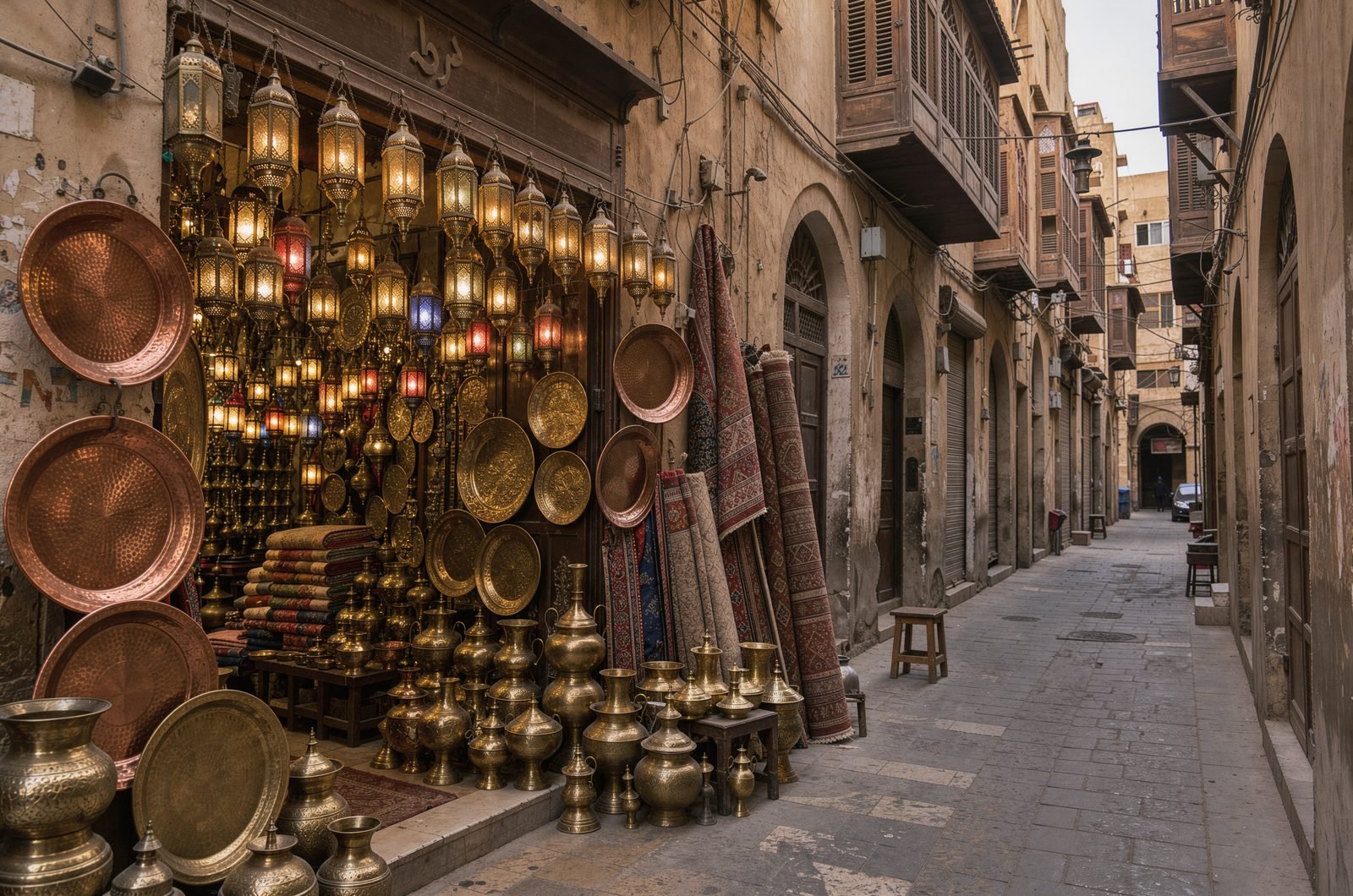
Cairo is the largest city in the Arab world, loud, chaotic and fascinating. Explore Islamic Cairo with its mosques, madrasas and the Khan el-Khalili bazaar, visit the Citadel of Saladin with the Mosque of Muhammad Ali, see the churches of Coptic Cairo, and have tea at the historic El Fishawy café. In the evening, take a felucca or dinner cruise on the Nile.
The Pyramids of Giza and the Sphinx

The Great Pyramid of Khufu, built around 2560 BC, is the only one of the Seven Wonders of the Ancient World still standing. Next to it stand the pyramids of Khafre and Menkaure, and the Great Sphinx, carved from the bedrock. Arrive at opening time, consider a camel or horse ride only with an agreed price, and visit Saqqara and Dahshur, with the Step Pyramid and the Bent Pyramid, for a quieter experience.


Grand Egyptian Museum

The Grand Egyptian Museum (GEM), next to the Giza plateau, held its grand opening in November 2025 and is the largest archaeological museum in the world dedicated to a single civilisation. For the first time, the complete treasures of Tutankhamun are displayed together, including his gold mask. A colossal statue of Ramesses II greets visitors in the atrium. Plan at least half a day. The old Egyptian Museum on Tahrir Square remains open as well.
Luxor

Luxor, ancient Thebes, is often called the largest open-air museum in the world. On the East Bank stand the Luxor Temple, beautiful at night, and the vast Karnak Temple complex with its Great Hypostyle Hall of 134 giant columns and the Sacred Lake.

On the West Bank lie the Valley of the Kings, with more than 60 royal tombs including that of Tutankhamun, the Valley of the Queens with the tomb of Nefertari, the terraced Temple of Hatshepsut and the Colossi of Memnon. A sunrise hot air balloon flight over the West Bank is one of the highlights of a trip to Egypt.


Aswan and Abu Simbel
Aswan is the most relaxed city on the Nile, with granite islands, sailing feluccas and colourful Nubian villages. Visit the Temple of Philae on its island, the Unfinished Obelisk and the High Dam, sail around Elephantine and Kitchener’s Island, and have tea on the terrace of the Old Cataract Hotel. On the way from Luxor, Nile cruises stop at the temples of Edfu and Kom Ombo.


Abu Simbel

About 280 km south of Aswan, near the border with Sudan, Ramesses II carved two huge temples into the rock, with four seated statues of himself, each about 20 metres high. In the 1960s the temples were cut into blocks and moved to higher ground to save them from the waters of Lake Nasser. Visit by plane or on an early morning road trip from Aswan.
Alexandria

Founded by Alexander the Great, Alexandria was once home to the famous Lighthouse, one of the Seven Wonders of the Ancient World, and the Great Library. Today you can visit the modern Bibliotheca Alexandrina, the Citadel of Qaitbay on the site of the old lighthouse, the Roman catacombs of Kom el-Shoqafa and the elegant cafés along the Corniche. Alexandria is an easy day trip or overnight stay from Cairo by train.
The Red Sea: Hurghada, Sharm El Sheikh and Dahab
The Red Sea is one of the best places in the world for diving and snorkelling, with warm, clear water and coral reefs right off the beach.

Sharm El Sheikh

At the southern tip of the Sinai, Sharm El Sheikh offers large resorts, the lively Naama Bay and the reefs of Ras Mohammed National Park, one of the most famous dive sites in the world. Wreck divers head to the SS Thistlegorm in the Strait of Gubal.
Hurghada

Hurghada is the largest resort on the African coast of the Red Sea, with many all-inclusive hotels, a modern marina and boat trips to the Giftun Islands. Nearby El Gouna, Soma Bay and Makadi Bay are quieter. Further south, Marsa Alam is known for dugongs and turtles. Luxor is about four hours away by road.
Dahab

Dahab is the relaxed, bohemian alternative, with seafront cafés, the famous Blue Hole and Lighthouse reef, windsurfing and trips to St. Catherine’s Monastery and the sunrise climb of Mount Sinai.
Siwa and the Western Desert

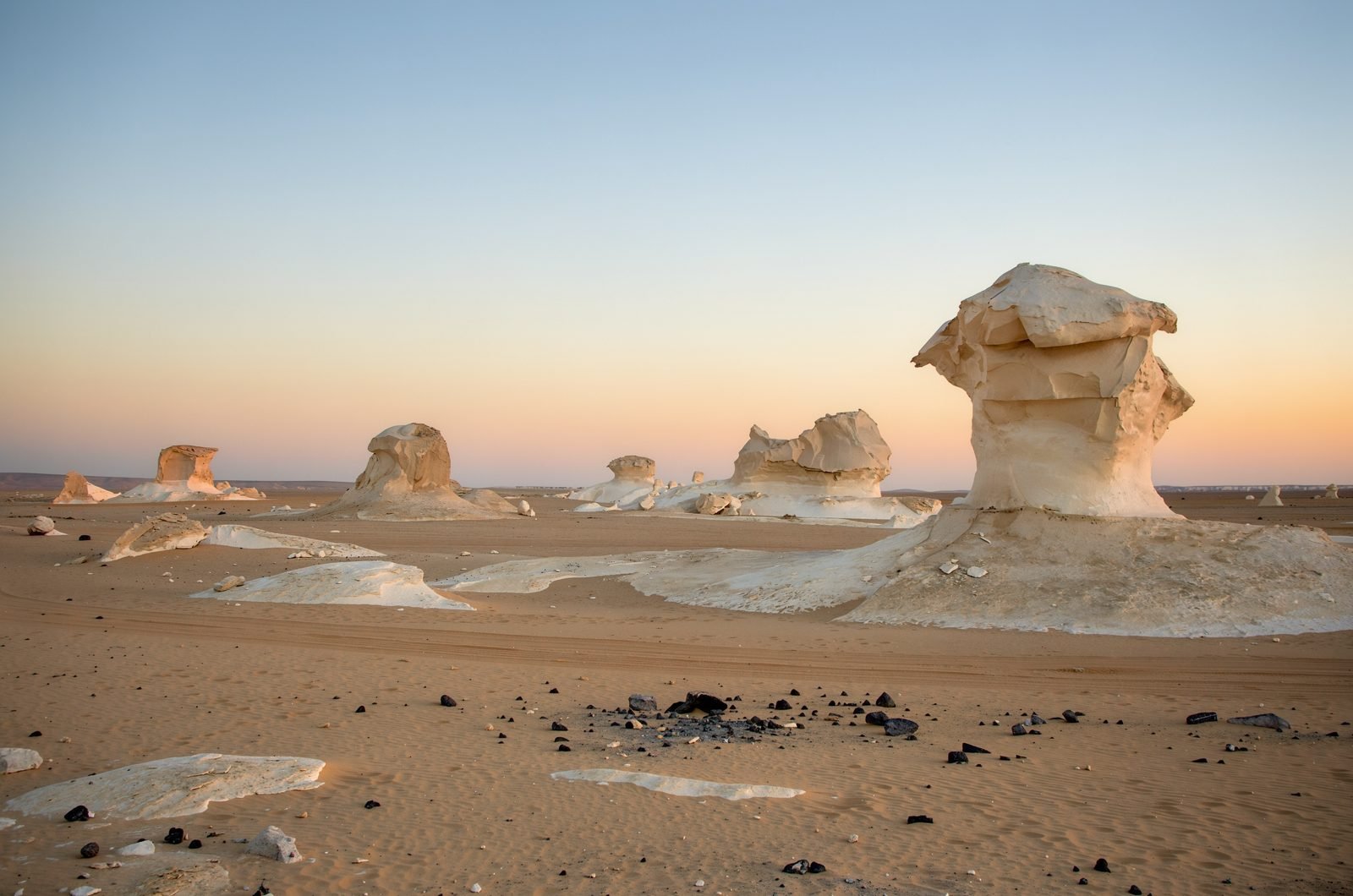
Far to the west, near the Libyan border, lies Siwa Oasis, with palm groves, salt lakes you can float in, hot springs and the crumbling mud-brick fortress of Shali. Alexander the Great visited the Oracle of Amun here. Further south, the White Desert near Farafra is known for its surreal white chalk rock formations, best seen on an overnight camping trip with a local guide.
Where to stay in Egypt
- Marriott Mena House, Giza: a historic palace hotel with views of the Great Pyramid from the garden and many rooms.
- Four Seasons Hotel Cairo at Nile Plaza: luxury on the Nile in Garden City, close to downtown.
- Al Moudira, Luxor: a peaceful boutique hotel on the West Bank, decorated with antiques and set in a large garden.
- Sofitel Legend Old Cataract, Aswan: the legendary hotel where Agatha Christie wrote part of Death on the Nile, with a terrace overlooking the river.
- Adrère Amellal, Siwa: an eco-lodge built from salt and mud, lit only by candles and oil lamps.
- Four Seasons Resort Sharm El Sheikh: a hillside resort with its own reef and beach.
- Kempinski Hotel Soma Bay: a large beach resort south of Hurghada, ideal for kitesurfing and families.
- Steigenberger Al Dau Beach, Hurghada: a popular resort with a long beach and pools.
Compare prices: check current rates for hotels in Cairo, hotels in Luxor and Red Sea hotels in Hurghada on Booking.com.
Egypt itinerary ideas
- 8 days, the classics: 3 days Cairo with Giza, the Grand Egyptian Museum and Saqqara, fly to Luxor, then a 4-night Nile cruise to Aswan with a day trip to Abu Simbel.
- 2 weeks, temples and reefs: 3 days Cairo, 3 days Luxor, 3 days Aswan and Abu Simbel, then fly to Hurghada or Sharm El Sheikh for 5 days on the Red Sea.
- Beach holiday with culture: a week in Hurghada or Marsa Alam with a two-day excursion to Luxor.
Practical Egypt travel tips
- Bring US dollars or euros in cash for the visa on arrival, and a credit card for the major sites.
- Drink only bottled water and avoid ice and raw salads in simple places.
- Dress modestly outside beach resorts: shoulders and knees covered, and a headscarf for women in mosques.
- Agree on prices for taxis, camel rides and feluccas before you start, and keep small notes for baksheesh.
- Photography with a phone is usually allowed at sites; professional cameras and drones may need a permit, and drones are banned without one.
- Protect yourself against the sun and drink plenty of water, especially in Luxor and Aswan.
- Travel insurance with medical cover is strongly recommended.
Book your trip to Egypt
A few services we find useful when planning a trip to Egypt:
- Tickets and tours: skip-the-line tickets and tours in Cairo and Giza on Tiqets
- Mobile data: an eSIM for Egypt from Airalo, so you are online as soon as you land
Some links in this section are affiliate links. If you book through them, CountryDiscover may earn a small commission at no extra cost to you.
Conclusion
Egypt combines some of the greatest monuments ever built with world-class diving and the warmth of Egyptian hospitality. Visit between October and April, combine Cairo and the Nile with a few days on the Red Sea, and book the Grand Egyptian Museum and Abu Simbel in advance.
Planning a longer trip? Read our guides to Turkey and Greece, or explore every country on our interactive world map.