
Morocco
Explore Morocco: A Complete Travel Guide
Morocco is just a short flight from Europe, yet it feels like another world. Get lost in the medinas of Marrakech and Fes, sleep under the stars in the Sahara, wander the blue streets of Chefchaouen, hike in the Atlas Mountains and relax on the Atlantic beaches of Essaouira and Agadir. Add spice-scented souks, mint tea and some of the best food in Africa, and it is easy to see why Morocco is the most visited country on the continent. This guide covers when to go, entry rules, getting around, costs, safety and etiquette, the top places to visit, food and where to stay.
Morocco travel guide: the essentials
- Capital: Rabat. The largest city is Casablanca; Marrakech is the main tourist hub.
- Currency: Moroccan dirham (MAD). It can only be obtained inside Morocco; ATMs are widely available, but carry cash for souks, taxis and small restaurants.
- Languages: Arabic and Amazigh (Berber) are official; French is widely used, and English is spoken in tourist areas.
- Entry: citizens of the EU, the UK, the US, Canada and Australia can visit visa-free for up to 90 days.
- Electricity: 220 V with type C and E plugs.
- Best for: medinas and markets, desert trips, mountains, surfing, food, architecture and riad stays.

Contents
- Best time to visit Morocco
- Entry rules
- Getting around Morocco
- Travel costs in 2026
- Safety and practical matters
- Culture, religion and etiquette
- Top places to visit
- Moroccan food and where to eat
- Where to stay
- Itinerary ideas
- Practical tips
Best time to visit Morocco
- Spring (March to May) and autumn (September to November): the best seasons for cities, the desert and the mountains, with warm days and cool nights.
- Summer (June to August): very hot inland, with temperatures above 40°C in Marrakech and the Sahara. The Atlantic coast stays pleasant.
- Winter (December to February): mild and sunny in Marrakech and on the coast, but cold at night, with snow in the High Atlas. Desert nights can drop below freezing.
During Ramadan, whose dates change every year, many restaurants close during the day, but the evenings are lively and festive.
Entry rules
- Visa-free: citizens of the EU, the UK, the US, Canada, Australia and many other countries can stay up to 90 days without a visa.
- Passport: must be valid for the length of your stay; six months of validity is recommended. ID cards are not accepted for most nationalities.
- Other nationalities: some can apply for an electronic visa online; check with the Moroccan embassy.
- Drones: importing drones without authorisation is not allowed.
Getting around Morocco
- By train: the Al Boraq high-speed train links Tangier, Rabat and Casablanca, and regular trains run to Marrakech and Fes.
- By bus: CTM and Supratours run comfortable long-distance buses to most towns, including Essaouira, Chefchaouen and Merzouga.
- By car: renting a car gives freedom in the mountains and the south, but city driving is hectic. Many travellers book a driver for desert trips.
- Taxis: petits taxis work within cities (insist on the meter); grands taxis are shared between towns.
- Tours: multi-day trips from Marrakech to the Sahara via the Atlas Mountains and Aït Benhaddou are very popular.
Travel costs in 2026
- Accommodation: a simple riad costs about €40 to €80 a night, a beautiful boutique riad €100 to €250, and luxury palaces much more.
- Food: a tagine in a local restaurant costs MAD 60 to 120; street food is cheaper.
- Tours: a three-day desert trip from Marrakech costs from about €100 to €250 per person, depending on comfort.
- Bargaining: prices in the souks are rarely fixed; start low and keep it friendly.
- Daily budget: plan on about €40 to €60 per person a day for budget travel and €100 to €180 for mid-range travel.
Safety and practical matters
Morocco is generally safe for travellers and welcomed a record of almost 20 million tourist arrivals in 2025. The main annoyances are persistent touts and “guides” in the medinas: say no firmly but politely and use an official guide if you want one. Watch your belongings in crowded places, use registered taxis at night and drink bottled water. Women travellers may receive unwanted attention; dressing modestly helps. The emergency numbers are 19 (police) and 15 (ambulance).
Culture, religion and etiquette
Morocco is a Muslim country with a rich mix of Arab, Amazigh, Andalusian and African influences, reflected in its music, crafts and architecture. Gnawa music, with its hypnotic rhythms, has UNESCO heritage status, and mint tea is the symbol of hospitality.
- Dress modestly, covering shoulders and knees, especially outside the beach resorts.
- Non-Muslims cannot enter most mosques; the Hassan II Mosque in Casablanca is the main exception, with guided tours.
- Ask permission before photographing people, and expect to tip if you photograph performers.
- Eat and greet with your right hand, and accept tea when it is offered.


Top places to visit in Morocco
Marrakech
The Red City is famous for the Jemaa el-Fna square, the souks, the Koutoubia Mosque, the Bahia Palace and the Majorelle Garden with the Yves Saint Laurent museum.


Fes
Fes el-Bali is one of the largest car-free urban areas in the world, with the Chouara tannery, the Al Quaraouiyine university and centuries-old madrasas. Hire a licensed guide for your first visit.

The Sahara
Ride a camel into the dunes of Erg Chebbi near Merzouga or Erg Chigaga near M’Hamid and spend the night in a desert camp under the stars.

Aït Benhaddou and the Atlas Mountains
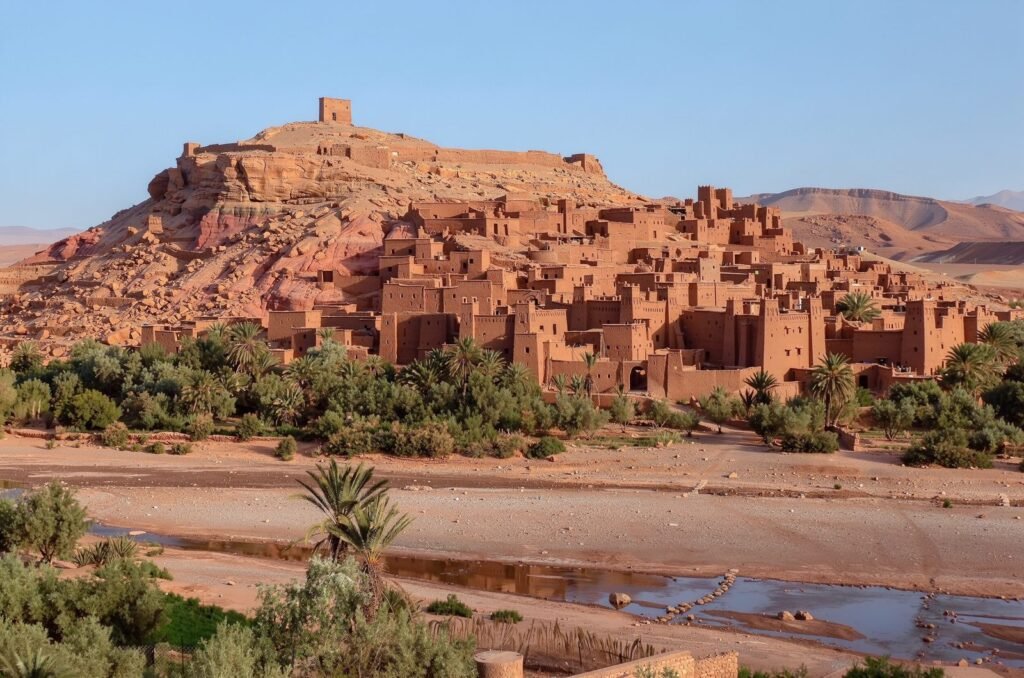
The fortified village of Aït Benhaddou is a UNESCO World Heritage Site and a famous film location. The High Atlas offers hiking around Imlil and Mount Toubkal, North Africa’s highest peak.
Chefchaouen
The blue town in the Rif Mountains is a relaxed base for hiking and photography.
Essaouira
A windswept fishing port with a white-and-blue medina, ramparts and a long beach popular with kitesurfers.

Casablanca, Rabat and Tangier
Casablanca is home to the vast Hassan II Mosque, Rabat has the Kasbah of the Udayas, and Tangier is the gateway from Spain.


The Atlantic coast
Agadir and Taghazout are popular for beach holidays and surfing, especially from autumn to spring.

Moroccan food and where to eat
Moroccan cuisine is fragrant rather than fiery. Try tagines slow-cooked in a clay pot, couscous on Fridays, pastilla (a sweet and savoury pie), harira soup, grilled sardines on the coast and pastries with almonds and honey, all washed down with sweet mint tea.


Recommended restaurants
- Nomad, Marrakech: modern Moroccan food on a rooftop above the spice square.
- Al Fassia, Marrakech: classic Moroccan cuisine run by women.
- Café Clock, Fes: a cultural café known for its camel burger and cooking classes.
- Rick’s Café, Casablanca: inspired by the classic film.
Where to stay
A riad, a traditional house built around a courtyard, is the classic choice in the medinas.
- La Mamounia, Marrakech: a legendary palace hotel with magnificent gardens.
- Royal Mansour, Marrakech: private riads within a palace complex.
- El Fenn, Marrakech: a colourful boutique riad with a rooftop pool.
- Riad Fès: a luxury riad in the old medina of Fes.
- Kasbah Tamadot, Atlas Mountains: a mountain retreat near Asni.
Compare prices: check current rates for hotels and riads in Marrakech, riads in Fes and beach hotels in Agadir on Booking.com.
Itinerary ideas
- Five days: Marrakech (3 days) and a day trip to the Atlas Mountains or Essaouira.
- One week: Marrakech, then a three-day desert trip via Aït Benhaddou and the Dades Gorge to Merzouga, ending in Fes.
- Ten days, imperial cities: Casablanca, Rabat, Chefchaouen, Fes, the Sahara and Marrakech.
- Winter sun: Agadir and Taghazout for beaches and surfing, combined with Marrakech.
Practical tips
- Agree on a price before taking a taxi without a meter or accepting a service.
- Carry small change for tips, tea and taxis.
- Download an offline map: medina alleys can be confusing.
- Book a riad close to a gate or taxi stand if you have heavy luggage.
- Respect prayer times and Ramadan customs.
- Keep your passport with you; hotels register it on arrival.
Book your trip to Morocco
A few services we find useful when planning a trip to Morocco:
- Car rental: compare rental cars on Economybookings.com
- Mobile data: an eSIM for Morocco from Airalo, so you are online as soon as you land
Some links in this section are affiliate links. If you book through them, CountryDiscover may earn a small commission at no extra cost to you.
Conclusion
Morocco offers an intoxicating mix of ancient medinas, desert landscapes, mountains and coast, all within a few hours of each other. Travel in spring or autumn, take your time, bargain with a smile and say yes to mint tea, and you will discover one of the most memorable countries in the world. For more inspiration, read our guides to Egypt, Spain and Portugal.