
Germany
Explore Germany: A Complete Travel Guide
Germany is a country of great contrasts: vibrant cities such as Berlin, Munich and Hamburg, fairy-tale castles, the vineyards of the Rhine and Moselle valleys, the Black Forest and the Bavarian Alps, and medieval towns that look straight out of a storybook. Add world-class museums, beer gardens, Christmas markets and a fast rail network, and it is easy to plan a varied trip in any season. This guide covers when to go, entry rules, getting around, costs, safety and etiquette, the top places to visit, food and where to stay.
Germany travel guide: the essentials
- Capital: Berlin, which is also the largest city.
- Currency: euro (EUR). Cards are widely accepted, but some bakeries, bars and small restaurants still prefer cash.
- Language: German. English is widely spoken in cities and by younger people.
- Entry: part of the Schengen Area; EU citizens need only an ID card.
- Electricity: 230 V with type C and F plugs.
- Best for: city breaks, history, castles, road trips, hiking, beer and wine, and Christmas markets.

Contents
- Best time to visit Germany
- Entry rules
- Getting around Germany
- Travel costs in 2026
- Safety and practical matters
- Culture and etiquette
- Top places to visit
- German food and where to eat
- Where to stay
- Itinerary ideas
- Practical tips
Best time to visit Germany
- Spring (April to June): mild weather, blossoming parks and the start of the beer garden season. A great time for cities and the Rhine.
- Summer (July and August): warm and lively, ideal for lakes, hiking in the Alps and the Baltic coast, but also the peak season.
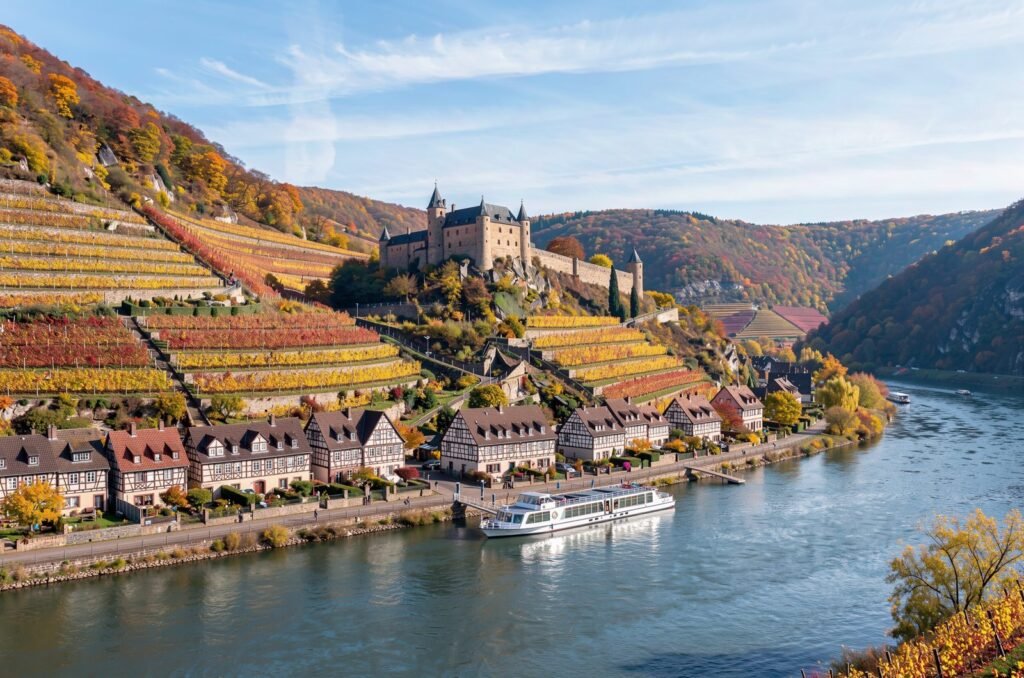
- Autumn (September and October): golden vineyards, wine festivals and Oktoberfest in Munich, which starts in late September.
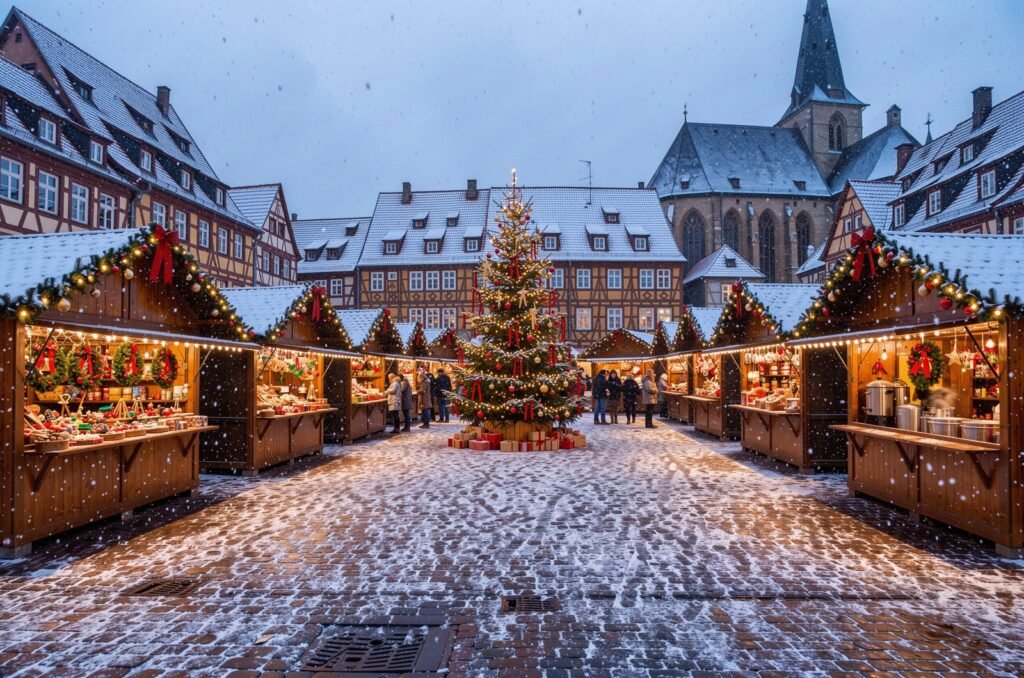
- Winter (November to February): cold and often grey, but Christmas markets light up almost every town from late November to Christmas, and skiing is possible in the Bavarian Alps.
Entry rules
- Schengen: Germany is part of the Schengen Area. Citizens of the EU and EEA can travel with an ID card.
- Visa-free visitors: citizens of countries such as the UK, the US, Canada and Australia can stay up to 90 days in any 180-day period without a visa.
- EES: the EU Entry/Exit System has been fully operational since April 2026. Non-EU visitors register their fingerprints and a facial image at the first Schengen border they cross.
- ETIAS: the planned travel authorisation for visa-exempt visitors is not yet in operation, and there is no confirmed start date.
Getting around Germany
- By train: Deutsche Bahn ICE high-speed trains link the main cities, for example Berlin to Munich in about four hours. Book early for saver fares. Trains are frequently delayed, so allow a buffer for connections.
- Deutschlandticket: for €63 a month (since January 2026), you get unlimited travel on all local and regional trains, buses, trams and metros across Germany. It is a monthly subscription that you can cancel, and it does not cover ICE or IC trains.
- By car: ideal for the Romantic Road, the Black Forest and the Alps. Parts of the autobahn have no general speed limit, but many sections do. Many cities have low-emission zones that require a green sticker (Umweltplakette).
- In cities: public transport is excellent. Berlin, Munich and Hamburg all have dense U-Bahn and S-Bahn networks.
Travel costs in 2026
- Accommodation: a mid-range hotel costs about €90 to €180 a night, with higher prices in Munich during trade fairs and Oktoberfest. Many cities charge a small accommodation tax.
- Food: a currywurst or döner costs about €4 to €8, a main course in a restaurant €15 to €28, and a half-litre of beer €4 to €6 (much more at Oktoberfest).
- Sights: museums usually cost €10 to €20, and Neuschwanstein Castle about €20 with a timed ticket.
- Daily budget: plan on about €70 to €100 per person a day for budget travel and €150 to €250 for mid-range travel.
Safety and practical matters
Germany is a safe country for travellers. Watch out for pickpockets at busy stations, Christmas markets and festivals. Shops close on Sundays almost everywhere, except at stations and airports, so plan your shopping. Tap water is safe to drink, but restaurants serve bottled water rather than free tap water. Cyclists have their own lanes: do not walk on them. The emergency number is 112 (fire and ambulance) or 110 (police).
Culture and etiquette
Germans value punctuality, order and privacy. Germany has a rich cultural heritage, from Bach and Beethoven to the Bauhaus, and every region has its own traditions, dialects and specialities.
- Be punctual, and greet people with a handshake and a clear “Guten Tag”.
- Respect quiet hours in residential areas, usually at night and on Sundays.
- Separate your rubbish and return bottles with a deposit (Pfand) at supermarkets.
- Tip about 5 to 10% by rounding up and telling the server the total when you pay.
- Look the other person in the eye when you say “Prost!” with a drink.


Top places to visit in Germany
Berlin
The capital is creative, historic and endlessly interesting. See the Brandenburg Gate, the Reichstag dome, Museum Island, the Holocaust Memorial and the remains of the Berlin Wall at the East Side Gallery, and explore neighbourhoods such as Kreuzberg and Prenzlauer Berg.

Munich and Bavaria
Munich combines beer halls and beer gardens with the Marienplatz, the English Garden and excellent museums. It is also the base for day trips to Neuschwanstein Castle, the Bavarian Alps around Berchtesgaden and Garmisch-Partenkirchen, and the medieval towns of the Romantic Road, such as Rothenburg ob der Tauber.


Hamburg
Germany’s great port city has the Speicherstadt warehouse district (a UNESCO World Heritage Site), the Elbphilharmonie concert hall, the Sunday-morning fish market and lively nightlife in St. Pauli.

Cologne and Frankfurt
Cologne is dominated by its huge Gothic cathedral on the Rhine and is famous for its carnival. Frankfurt, the financial centre, has a skyline of skyscrapers alongside the rebuilt old town around the Römerberg.


The Rhine and Moselle valleys
The Upper Middle Rhine Valley between Bingen and Koblenz is lined with castles, vineyards and pretty villages and is a UNESCO World Heritage Site. Take a river cruise or a train along the river. The winding Moselle valley is quieter, with steep vineyards and towns such as Cochem and Bernkastel-Kues.

Heidelberg, the Black Forest and Dresden
Heidelberg has a romantic castle ruin and Germany’s oldest university. The Black Forest offers hiking, cuckoo clocks and spa towns such as Baden-Baden. In the east, Dresden is famous for its baroque old town and the rebuilt Frauenkirche.

German food and where to eat
German food is hearty and regional. Try bratwurst and sauerkraut, schnitzel, pork knuckle, pretzels with Bavarian white sausage, spätzle in the south-west, currywurst in Berlin and fish sandwiches in Hamburg. Finish with Black Forest cake or apple strudel. Germany is famous for its beer purity tradition and has more than 1,000 breweries, while the Rhine and Moselle produce excellent Riesling.


Recommended restaurants
- Hofbräuhaus, Munich: the world’s most famous beer hall, a must for first-time visitors.
- Curry 36, Berlin: a classic spot for currywurst.
- Brücke 10, Hamburg: popular fish sandwiches by the harbour.
- Früh am Dom, Cologne: a traditional brewery tavern serving Kölsch beer.
Where to stay
- Hotel Adlon Kempinski, Berlin: a legendary luxury hotel next to the Brandenburg Gate.
- Hotel Bayerischer Hof, Munich: a classic grand hotel with a rooftop pool.
- The Fontenay, Hamburg: a striking modern hotel on the Alster lake.
Compare prices: check current rates for hotels in Berlin, hotels in Munich and hotels in Hamburg on Booking.com. Book early for Oktoberfest and major trade fairs, when prices rise sharply.
Itinerary ideas
- Long weekend: Berlin, with a day trip to Potsdam and the palaces of Sanssouci.
- One week, Bavaria: Munich, Neuschwanstein, Garmisch-Partenkirchen or Berchtesgaden, and Rothenburg ob der Tauber.
- Ten days, the classics: Berlin, Dresden, Munich, Heidelberg, the Rhine Valley and Cologne by train.
- Christmas markets: Nuremberg, Munich, Cologne and Dresden in late November or December.
Practical tips
- Book Neuschwanstein tickets online in advance; they sell out in summer.
- Buy a Deutschlandticket if you plan several regional train trips in one month.
- Carry some cash for small purchases and Christmas markets.
- Remember that most shops are closed on Sundays.
- Validate paper tickets on trams and buses if your ticket requires it; inspectors issue fines.
- Reserve a table at popular beer halls and restaurants in the evening.
Book your trip to Germany
A few services we find useful when planning a trip to Germany:
- Car rental: compare rental cars on Economybookings.com
- Mobile data: an eSIM for Germany from Airalo, so you are online as soon as you land
Some links in this section are affiliate links. If you book through them, CountryDiscover may earn a small commission at no extra cost to you.
Conclusion
Germany rewards every kind of traveller, from history lovers in Berlin to hikers in the Alps and wine lovers on the Rhine. Use the trains, plan around the seasons and festivals, and leave time for the smaller towns between the big cities. For more inspiration, read our guides to Austria, Switzerland and the Netherlands.