
Austria
Explore Austria: A Complete Travel Guide
Austria is a country of imperial palaces, classical music and Alpine scenery. Vienna dazzles with Habsburg palaces, world-famous museums and its coffee house culture; Salzburg is the city of Mozart; Innsbruck lies right at the foot of the mountains; and lakeside villages such as Hallstatt look like postcards. In winter Austria is one of Europe’s top ski destinations, while in summer the Alps are perfect for hiking, cycling and swimming in crystal-clear lakes. This guide covers when to go, entry rules, getting around, costs, culture, the top places to visit, food and where to stay.
Austria travel guide: the essentials
- Capital: Vienna. Other major cities are Graz, Linz, Salzburg and Innsbruck.
- Currency: euro (EUR).
- Language: German, with a distinct Austrian accent and vocabulary. English is widely spoken in tourist areas.
- Entry: Austria is part of the EU and the Schengen Area.
- Electricity: 230 V with type C and F plugs.
- Best for: city breaks, classical music, museums, skiing, hiking, lakes and Christmas markets.

Contents
- Best time to visit Austria
- Entry rules
- Getting around Austria
- Travel costs in 2026
- Safety and mountain tips
- Culture and traditions
- Vienna
- Top places to visit
- Austrian food and where to eat
- Where to stay
- Itinerary ideas
- Practical tips
Best time to visit Austria
- Spring (April to June): pleasant city weather, blossoming gardens and fewer crowds; the high mountain trails open from June.
- Summer (July and August): the season for hiking, lakes and festivals such as the Salzburg Festival. Popular places like Hallstatt get very busy.
- Autumn (September and October): grape harvest in the Wachau, golden forests and the Viennese wine taverns (Heurigen).
- Winter (December to March): skiing in Tyrol and Salzburgerland, and some of Europe’s most atmospheric Christmas markets from mid-November.
Entry rules
- EU citizens: can travel with a valid passport or national ID card.
- Other visitors: the Schengen rules apply. Many nationalities, including US, UK, Canadian and Australian citizens, can stay up to 90 days in any 180-day period without a visa.
- EES: non-EU travellers have their fingerprints and a facial image registered at the external Schengen border, for example at Vienna Airport.
- ETIAS: the planned European travel authorisation is not yet in operation and has no confirmed start date.
Getting around Austria
- By train: ÖBB’s Railjet trains link Vienna, Salzburg and Innsbruck quickly and comfortably, and Nightjet sleeper trains connect Austria with cities across Europe.
- Klimaticket: an annual pass for all public transport in Austria, mainly useful for longer stays.
- By car: a vignette (digital or sticker) is required on motorways and expressways, and some Alpine roads, such as the Grossglockner High Alpine Road, charge a separate toll.
- In the cities: Vienna has an excellent network of U-Bahn, trams and buses; a Vienna City Card includes public transport and discounts.
Travel costs in 2026
- Accommodation: a mid-range hotel costs about €120 to €220 a night; ski resorts are much more expensive in winter.
- Food: a main course in a traditional inn (Gasthaus) costs €15 to €25; coffee and cake in a Viennese café about €8 to €12.
- Tourist tax: a local tax is added to accommodation bills. In Vienna it rose from 3.2% to 5% of the room price in July 2026 and is set to rise to 8% in July 2027.
- Daily budget: plan on about €80 to €120 per person a day for budget travel and €150 to €250 for mid-range travel.
Safety and mountain tips
Austria is a very safe country. In the mountains, check the weather and avalanche reports, stay on marked trails and ski runs, and make sure your travel insurance covers mountain rescue, which can be very expensive. Popular places are busier than ever: Vienna alone recorded a record 20 million overnight stays in 2025, and Hallstatt has introduced measures against overtourism, so visit early or late in the day. The emergency number is 112; mountain rescue is 140.
Culture and traditions
Austria gave the world Mozart, Haydn, Schubert, Strauss and Klimt, and music is still everywhere, from the Vienna State Opera to village brass bands. In the Alps, traditional dress such as dirndl and lederhosen is worn at festivals and weddings. The Viennese coffee house is on UNESCO’s list of intangible heritage: order a melange and take your time.


Vienna
The Austrian capital is one of the world’s most liveable cities. Visit Schönbrunn Palace and its gardens, the Hofburg and the Sisi Museum, St. Stephen’s Cathedral, the Belvedere with Klimt’s “The Kiss”, the MuseumsQuartier and the Prater with its giant Ferris wheel. In the evening, enjoy a concert or a glass of wine in a Heuriger on the edge of the city.


Top places to visit in Austria
Salzburg
Mozart’s birthplace, a baroque old town (UNESCO), the Hohensalzburg Fortress and filming locations from The Sound of Music.


Hallstatt and the Salzkammergut
Picture-perfect villages, salt mines and lakes such as the Hallstätter See, Wolfgangsee and Traunsee. Arrive early or stay overnight to avoid the day-trip crowds.


Innsbruck and Tyrol
The capital of Tyrol, with its Golden Roof, the Nordkette cable car straight from the city centre and easy access to ski resorts such as Kitzbühel, St. Anton and Mayrhofen.


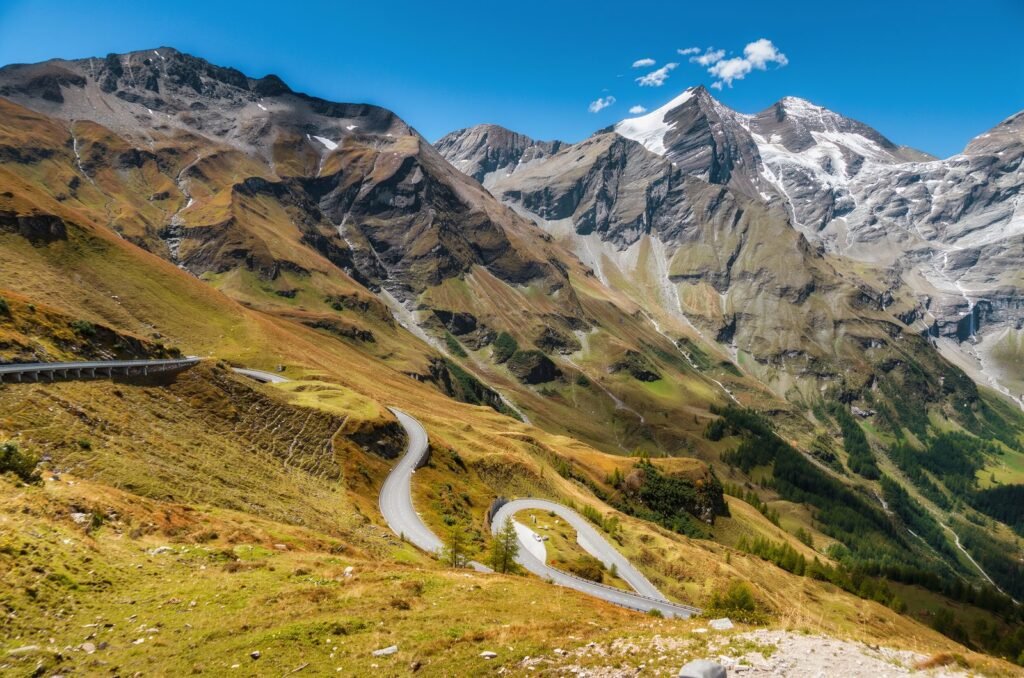
The Grossglockner High Alpine Road
Austria’s most spectacular mountain road leads to the foot of its highest peak (3,798 metres) and is open from about May to October.
The Wachau Valley and Melk Abbey
A UNESCO-listed stretch of the Danube with vineyards, apricot orchards and castles, best explored by bike or boat, with the magnificent baroque Melk Abbey.


Graz and the Alps
Graz, Austria’s second city, has a UNESCO-listed old town and a lively food scene. The country’s alpine lakes and valleys, such as Zell am See and the Zillertal, are ideal for summer holidays.


Austrian food and where to eat
Austrian cuisine is hearty and comforting: Wiener Schnitzel, Tafelspitz (boiled beef), goulash, Käsespätzle in the Alps and, of course, cakes and pastries such as Sachertorte, apple strudel and Kaiserschmarrn. Pair them with Grüner Veltliner wine or a local beer.
Recommended restaurants and cafés
- Figlmüller, Vienna: famous for its huge Wiener Schnitzel.
- Steirereck, Vienna: one of the best restaurants in the world, in the Stadtpark.
- Café Central and Café Sperl, Vienna: classic coffee houses.
- Café Sacher, Vienna and Salzburg: home of the original Sachertorte.
Where to stay
- Hotel Sacher, Vienna and Salzburg: historic luxury hotels opposite the opera and on the Salzach river.
- Hotel Goldener Hirsch, Salzburg: a traditional hotel in the old town on the Getreidegasse.
- Interalpen-Hotel Tyrol: a mountain resort on a plateau above the Inn valley.
Compare prices: check current rates for hotels in Vienna, hotels in Salzburg and hotels in Innsbruck on Booking.com.
Itinerary ideas
- Four days: Vienna, with a day trip to the Wachau Valley and Melk Abbey.
- One week: Vienna (3 days), Hallstatt (1 day) and Salzburg (2 days) by train.
- Ten days: Vienna, Salzburg, the Salzkammergut, the Grossglockner road and Innsbruck.
- Winter: a ski week in Tyrol combined with Christmas markets in Innsbruck, Salzburg or Vienna.
Practical tips
- Buy a vignette before using motorways; fines are high.
- Many shops are closed on Sundays.
- Round up the bill or tip about 5 to 10% in restaurants.
- Book opera, concert and Spanish Riding School tickets in advance.
- Visit Hallstatt early in the morning or stay overnight.
- Ask for tap water (“Leitungswasser”); it comes straight from the Alps.
Book your trip to Austria
A few services we find useful when planning a trip to Austria:
- Car rental: compare rental cars for the Alps on Economybookings.com
- Mobile data: an eSIM for Austria from Airalo, useful if your plan does not include EU roaming
Some links in this section are affiliate links. If you book through them, CountryDiscover may earn a small commission at no extra cost to you.
Conclusion
Austria combines imperial grandeur, music and coffee house culture with some of the most beautiful mountain scenery in Europe. Pair Vienna or Salzburg with the lakes and the Alps, and visit in summer for hiking or in winter for skiing and Christmas markets. For more inspiration, read our guides to Switzerland, Italy and Croatia.