
Netherlands
Explore the Netherlands: A Complete Travel Guide
The Netherlands is small, flat and easy to explore, yet it is packed with variety. Cruise the canals of Amsterdam, see masterpieces by Rembrandt and Van Gogh, cycle past windmills and tulip fields, admire the bold architecture of Rotterdam and discover charming historic towns such as Utrecht, Delft, Haarlem and Maastricht. Excellent trains and bike paths connect almost everything within a few hours. This guide covers when to go, entry rules, getting around, costs, safety and etiquette, the top places to visit, food and where to stay.
Netherlands travel guide: the essentials
- Capital: Amsterdam. The government and parliament sit in The Hague.
- Currency: euro (EUR). Debit and credit cards are accepted almost everywhere, and some places no longer accept cash.
- Language: Dutch. English is spoken very widely.
- Entry: part of the Schengen Area; EU citizens need only an ID card.
- Electricity: 230 V with type C and F plugs.
- Best for: city breaks, art museums, cycling, canals, tulips, windmills and cosy cafés.

Contents
- Best time to visit the Netherlands
- Entry rules
- Getting around the Netherlands
- Travel costs in 2026
- Safety and practical matters
- Culture and etiquette
- Top places to visit
- Dutch food and where to eat
- Where to stay
- Itinerary ideas
- Practical tips
Best time to visit the Netherlands
- Spring (late March to May): tulip season. The bulb fields bloom from about late March to early May, and the Keukenhof gardens are open for around eight weeks in spring. King’s Day on 27 April turns the country orange.
- Summer (June to August): long days, terraces, beaches and festivals, but also the busiest and most expensive time in Amsterdam.
- Autumn (September to November): fewer crowds and good hotel deals, with more wind and rain.
- Winter (December to February): mild but grey, with festive lights and the Amsterdam Light Festival. When it freezes hard, the Dutch go skating on canals and lakes.
Entry rules
- Schengen: the Netherlands is part of the Schengen Area. Citizens of the EU and EEA can travel with an ID card.
- Visa-free visitors: citizens of countries such as the UK, the US, Canada and Australia can stay up to 90 days in any 180-day period without a visa.
- EES: the EU Entry/Exit System has been fully operational since April 2026. Non-EU visitors register their fingerprints and a facial image at the first Schengen border they cross.
- ETIAS: the planned travel authorisation for visa-exempt visitors is not yet in operation, and there is no confirmed start date.
Getting around the Netherlands
- By train: NS trains are frequent and fast. Amsterdam to Utrecht takes about 30 minutes, and to Rotterdam or The Hague less than an hour. Schiphol Airport has its own station.
- Contactless payment: you can tap in and out with a contactless bank card or phone on trains, trams, buses and metros (OVpay), so you do not need a separate travel card.
- By bike: the Netherlands has more bikes than people and thousands of kilometres of cycle paths. Rent a bike in any city, or use an OV-fiets at stations if you have a Dutch public transport subscription.
- By car: useful for the countryside and the coast, but parking in cities is expensive and limited. Use park-and-ride sites outside Amsterdam.
Travel costs in 2026
- Accommodation: hotels in Amsterdam are among the most expensive in Europe. Expect €150 to €300 a night for a mid-range double, while other cities are noticeably cheaper.
- Taxes: since 1 January 2026, VAT on hotel stays has risen from 9% to 21%. Amsterdam also charges a tourist tax of 12.5% of the room price, so taxes add about a third to the bill.
- Food: lunch costs about €12 to €20, and a main course in a restaurant €20 to €35.
- Museums: major museums such as the Rijksmuseum and the Van Gogh Museum cost around €25. Book timed tickets online.
- Daily budget: plan on about €90 to €130 per person a day for budget travel and €180 to €300 for mid-range travel in Amsterdam; less elsewhere.
Safety and practical matters
The Netherlands is a safe country. The main risks for visitors are pickpockets in busy areas, trams and trains, and bike traffic: never walk on the red cycle paths and look out for cyclists before crossing. In Amsterdam, smoking cannabis in public in the Red Light District is banned, and taking photos of sex workers is not allowed. The emergency number is 112.
Culture and etiquette
The Dutch are known for being direct, practical and tolerant. They value punctuality, equality and a good work-life balance. Gezelligheid, a word for cosiness and good company, is at the heart of Dutch social life.
- Be on time for appointments and dinner invitations.
- Do not take directness personally; it is meant as honesty, not rudeness.
- Tipping is appreciated but modest: round up or leave about 5 to 10% for good service.
- Respect local residents in busy neighbourhoods: keep noise down at night.


Top places to visit in the Netherlands
Amsterdam
The capital is famous for its 17th-century canal ring (a UNESCO World Heritage Site), the Rijksmuseum, the Van Gogh Museum, the Anne Frank House and the Jordaan neighbourhood. Take a canal cruise, explore the markets and spend time in the Vondelpark. Book tickets for the Anne Frank House well in advance.


Rotterdam
Rebuilt after the Second World War, Rotterdam is the country’s showcase of modern architecture, with the Erasmus Bridge, the Cube Houses, the Markthal food hall and Depot Boijmans Van Beuningen. It is also home to Europe’s largest port.


Utrecht
A lively university city with canals lined with wharf cellars, cafés at water level and the Dom Tower, the tallest church tower in the country.


The Hague and Delft
The Hague is home to the Dutch parliament, the Mauritshuis with Vermeer’s Girl with a Pearl Earring and the beach of Scheveningen. Nearby Delft is a picture-perfect canal town famous for its blue-and-white pottery.


Haarlem and Leiden
Haarlem, just 15 minutes from Amsterdam by train, has a beautiful market square, the Grote Kerk and the Frans Hals Museum. Leiden is a university town with canals, museums and one of the oldest botanical gardens in the world.


Maastricht, Groningen and Nijmegen
Maastricht in the far south has a Burgundian atmosphere, Roman remains and great food. Groningen is a vibrant student city in the north, and Nijmegen on the river Waal is the oldest city in the Netherlands.


Windmills: Kinderdijk and Zaanse Schans
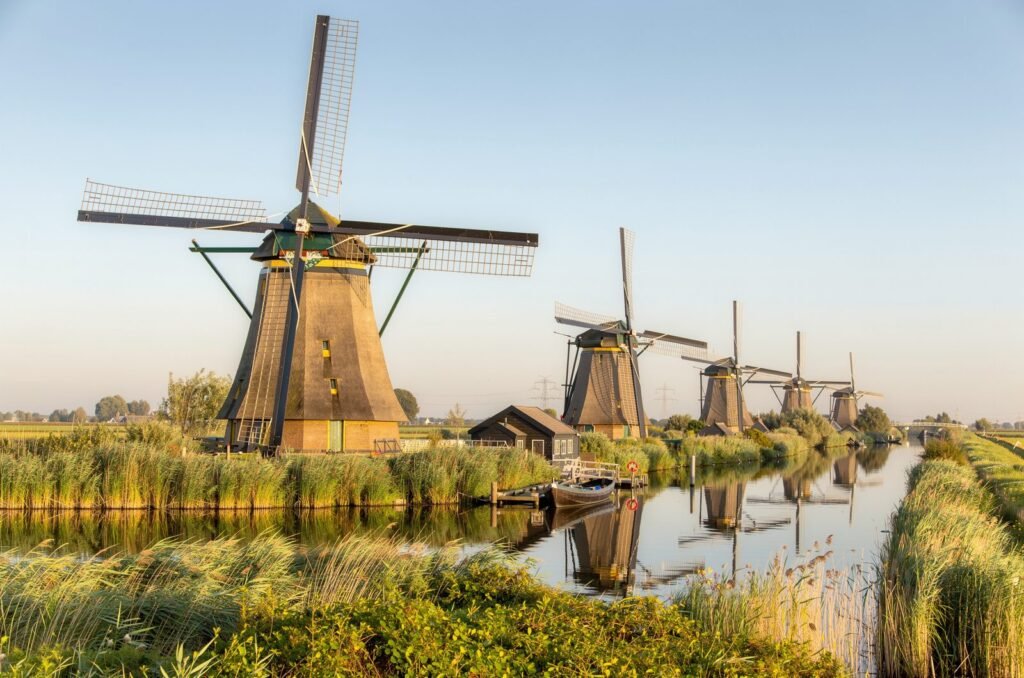
The 19 windmills of Kinderdijk, a UNESCO World Heritage Site near Rotterdam, show how the Dutch have kept their land dry for centuries. Zaanse Schans, near Amsterdam, has working windmills, wooden houses and craft workshops.

Tulip fields and Keukenhof
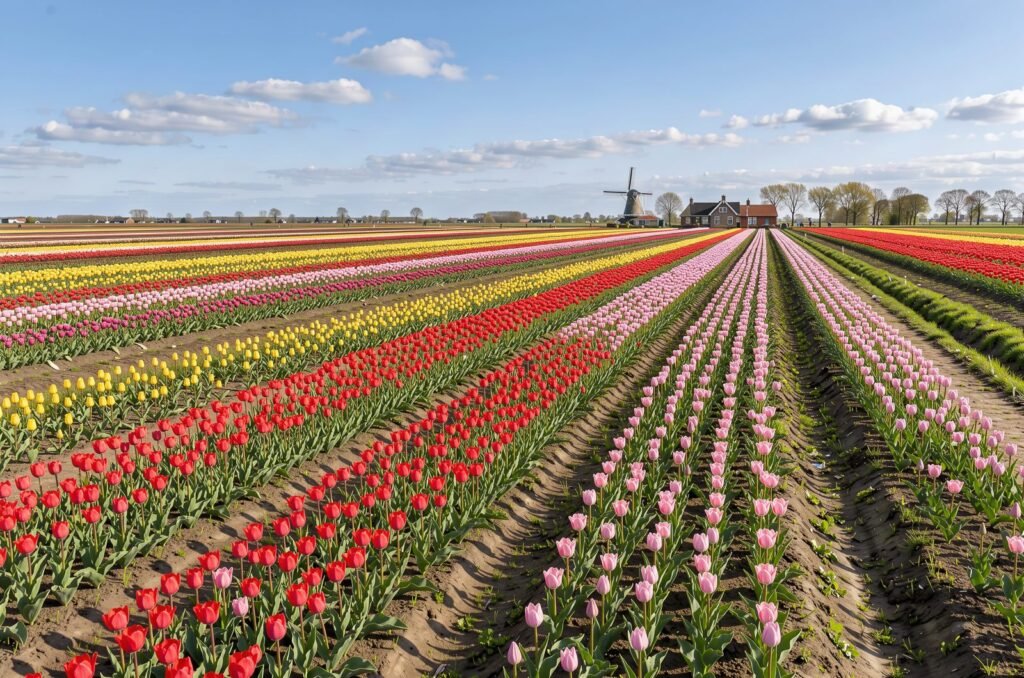
In spring, the bulb region between Haarlem and Leiden is covered with stripes of colour. Keukenhof in Lisse is one of the world’s largest flower gardens and is open only in spring. Cycling between the fields is the best way to see them.
Nature and fun
The Hoge Veluwe National Park combines heathland, forests and the Kröller-Müller Museum. The Wadden Islands offer wide beaches and mudflat walking, and Efteling is one of Europe’s oldest and most enchanting theme parks.


Dutch food and where to eat
Dutch food is hearty and simple. Try raw herring with onions, stamppot (mashed potatoes with vegetables) in winter, bitterballen with a beer, poffertjes (mini pancakes), Dutch cheese such as Gouda and Edam, and fresh stroopwafels from a market. Thanks to its colonial past, Indonesian food is also very popular: try a rijsttafel with many small dishes.


Recommended restaurants
- Rijks, Amsterdam: creative Dutch cuisine at the Rijksmuseum.
- Café Caron, Amsterdam: a cosy French-style bistro.
- De Librije, Zwolle: one of the country’s most celebrated fine dining restaurants, in a former prison.
- Markthal, Rotterdam: dozens of food stalls under one roof, ideal for a casual lunch.
Where to stay
- InterContinental Amstel Amsterdam: a grand 19th-century hotel on the river Amstel.
- Pulitzer Amsterdam: 25 canal houses joined together into one stylish hotel.
- Hotel New York, Rotterdam: the former headquarters of the Holland America Line on the waterfront.
- Hotel Des Indes, The Hague: a historic luxury hotel in the city centre.
Compare prices: check current rates for hotels in Amsterdam, hotels in Rotterdam and hotels in Utrecht on Booking.com. Staying in Utrecht, Haarlem or Leiden is a good way to save money while keeping Amsterdam within easy reach.
Itinerary ideas
- Weekend: two days in Amsterdam with a canal cruise, the museums and the Jordaan, plus an afternoon in Haarlem.
- Five days: Amsterdam (2 days), Zaanse Schans, Utrecht, and Rotterdam with Kinderdijk.
- One week: add The Hague, Delft and Leiden, or the tulip fields in spring.
- Ten days: include Maastricht in the south and Groningen or a Wadden Island in the north.
Practical tips
- Book museums and the Anne Frank House online; many are sold out on the day.
- Stay outside Amsterdam to save on hotel costs and taxes.
- Check in and out with the same card on public transport, or you will be charged the maximum fare.
- Lock your bike with two locks; bike theft is common in cities.
- Bring a rain jacket in every season.
- Many shops and restaurants are card-only; keep a debit or credit card handy.
Book your trip to the Netherlands
A few services we find useful when planning a trip to the Netherlands:
- Car rental: compare rental cars on Economybookings.com
- Mobile data: an eSIM for the Netherlands from Airalo, so you are online as soon as you land
Some links in this section are affiliate links. If you book through them, CountryDiscover may earn a small commission at no extra cost to you.
Conclusion
The Netherlands combines world-class art, lively cities and classic Dutch landscapes in a country you can cross by train in a few hours. Go beyond Amsterdam, rent a bike, visit in tulip season if you can and book ahead for the big museums. For more inspiration, read our guides to Belgium, Germany and Denmark.